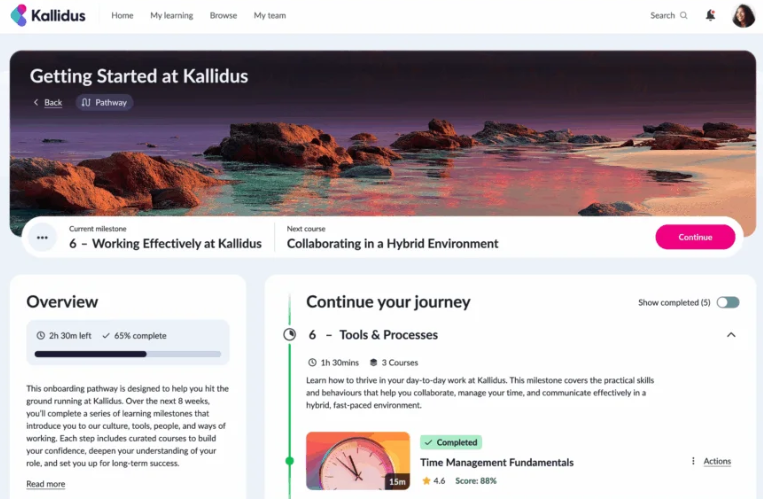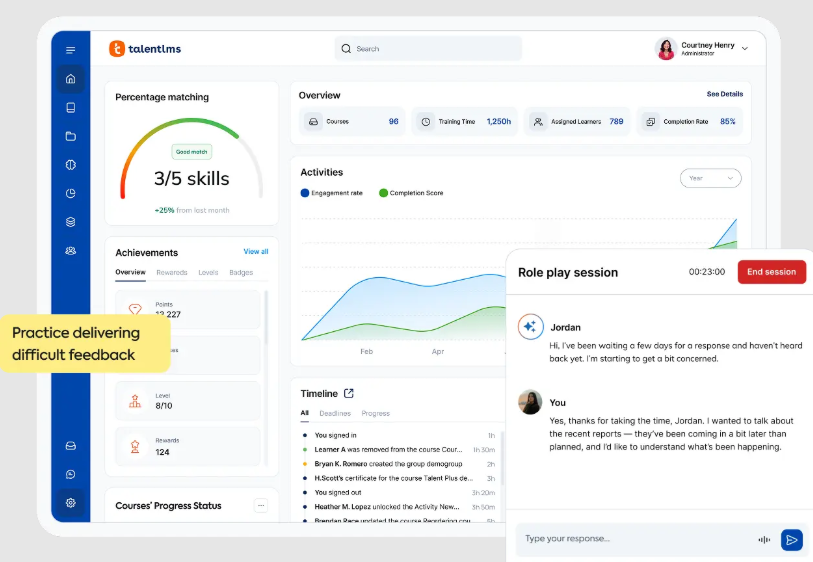
%20(1).webp)












.webp)

.webp)
Quick summary
Every enterprise learning platform now claims AI, but few build it into how skills, content and coaching work. HowNow leads this list of the top AI enterprise learning software, with a skills graph, adaptive pathways and an AI coach in one platform.
Docebo suits large organisations training customers and partners alongside employees. Absorb LMS fits teams that want AI agents grounded in their own approved content.
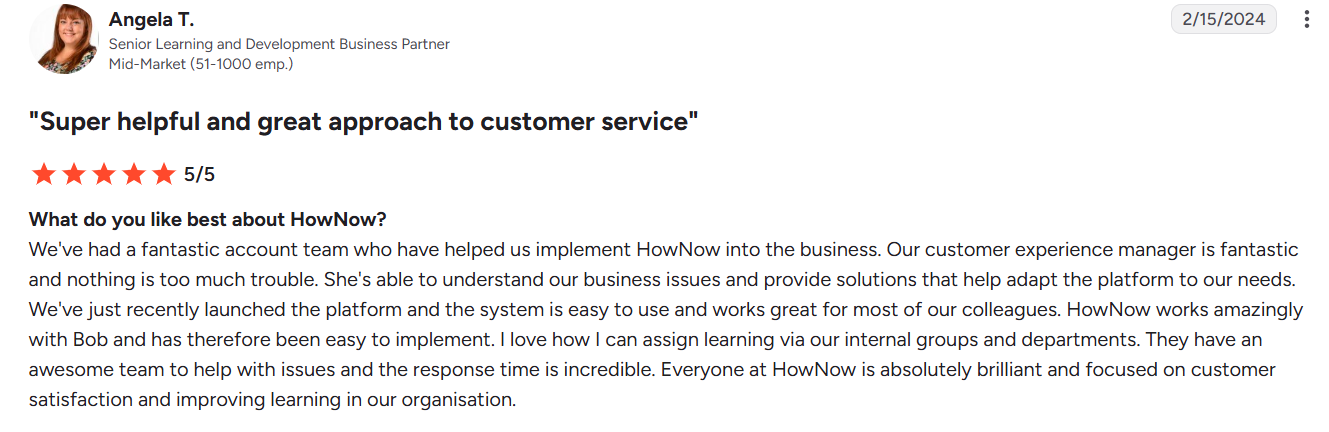
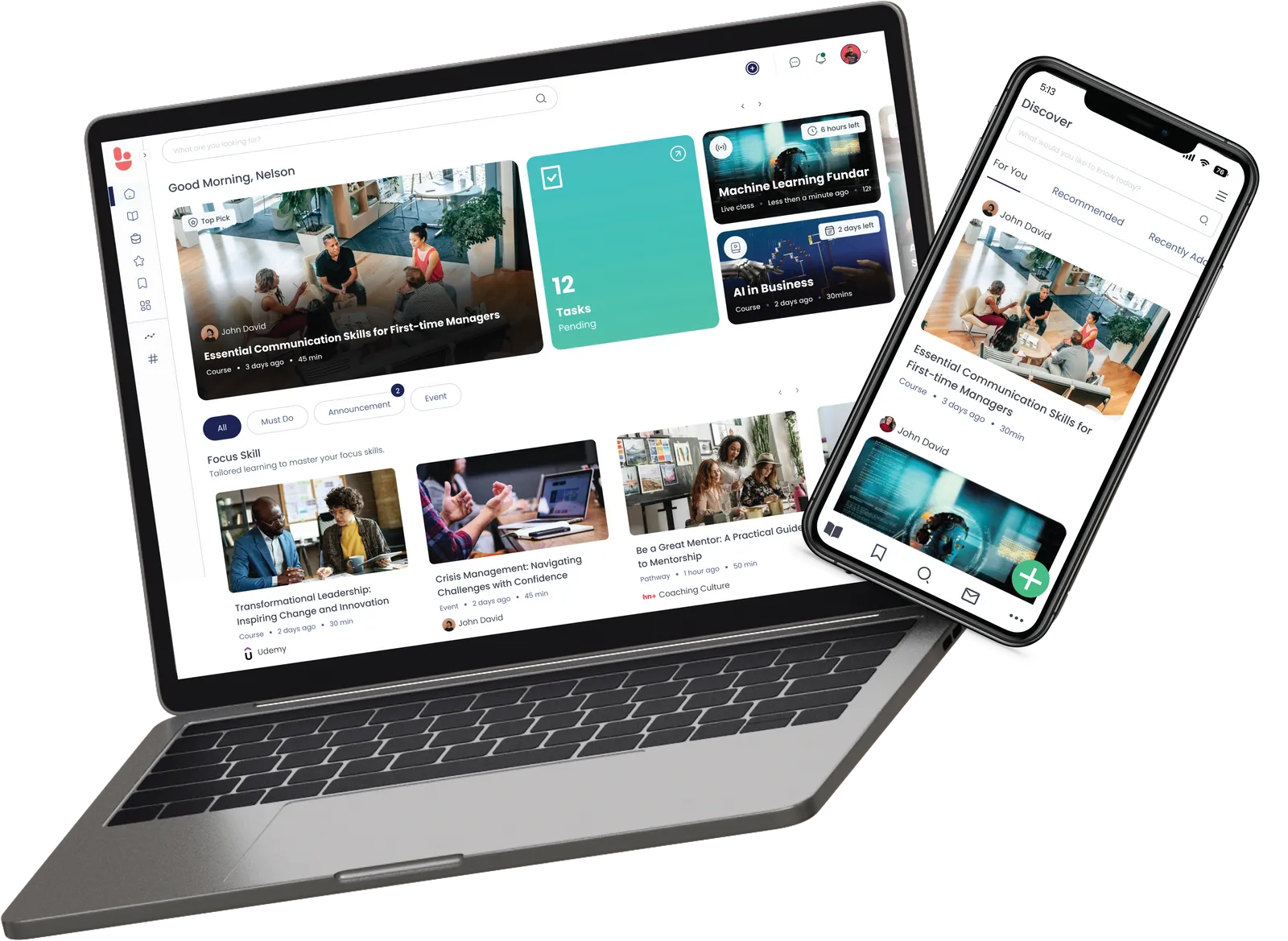
1. HowNow
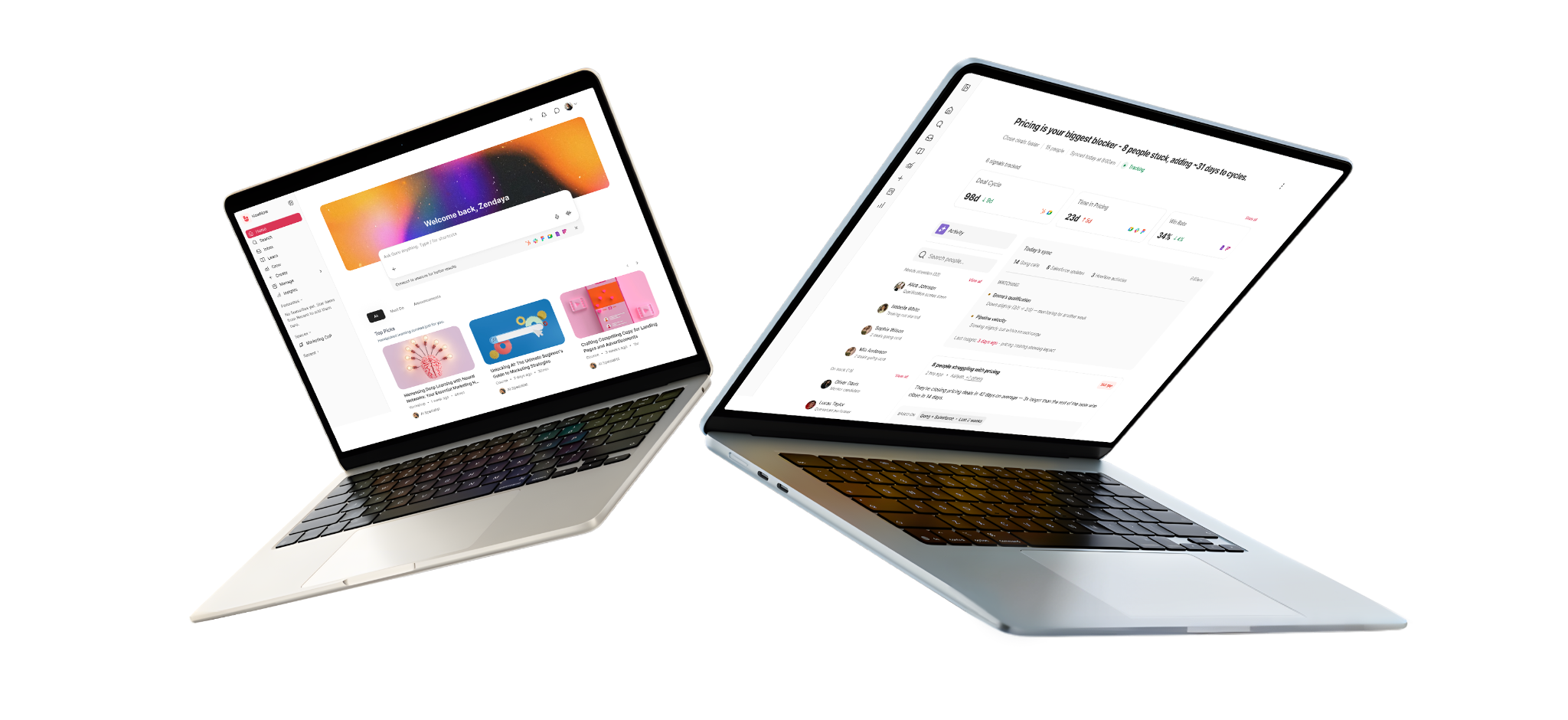
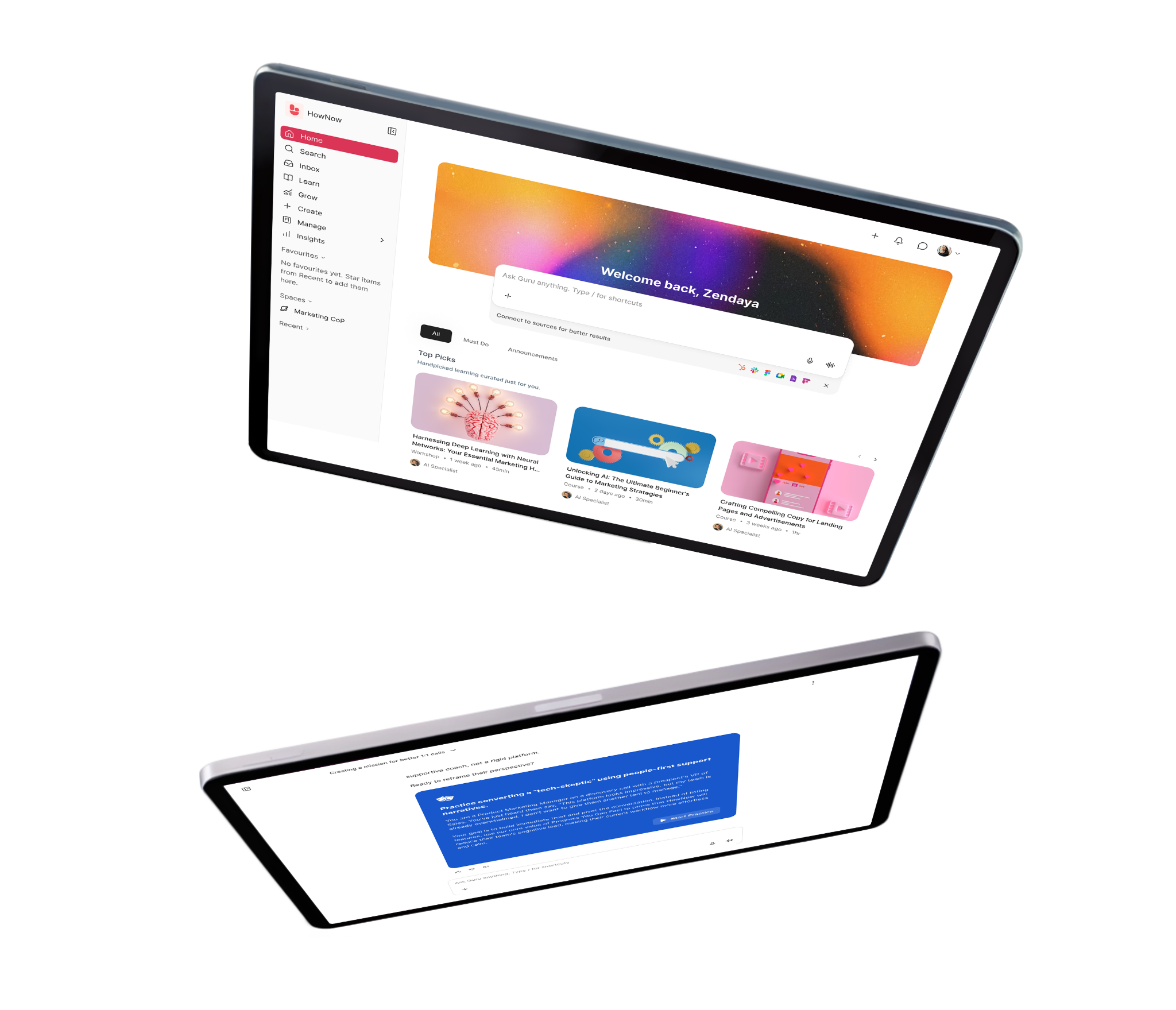
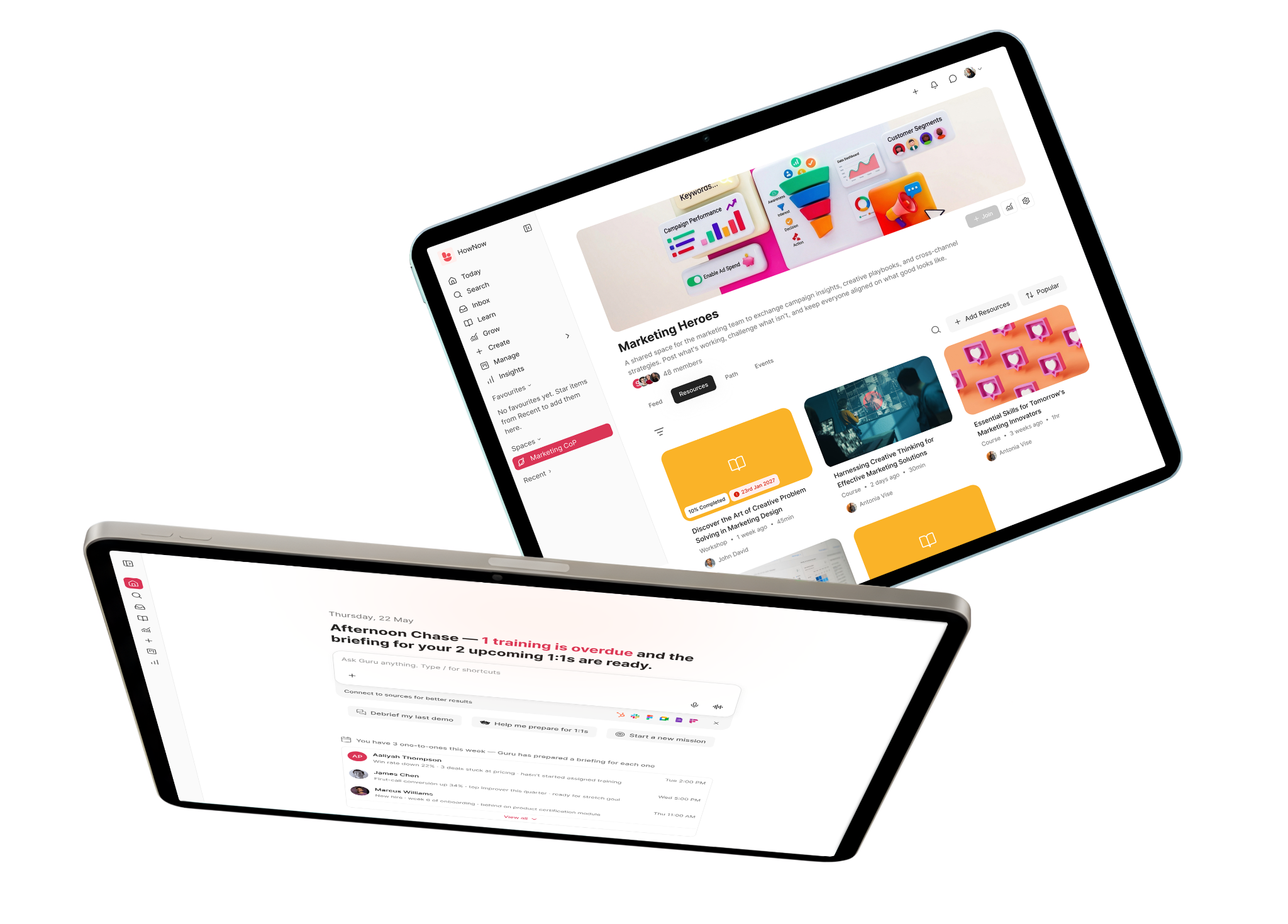
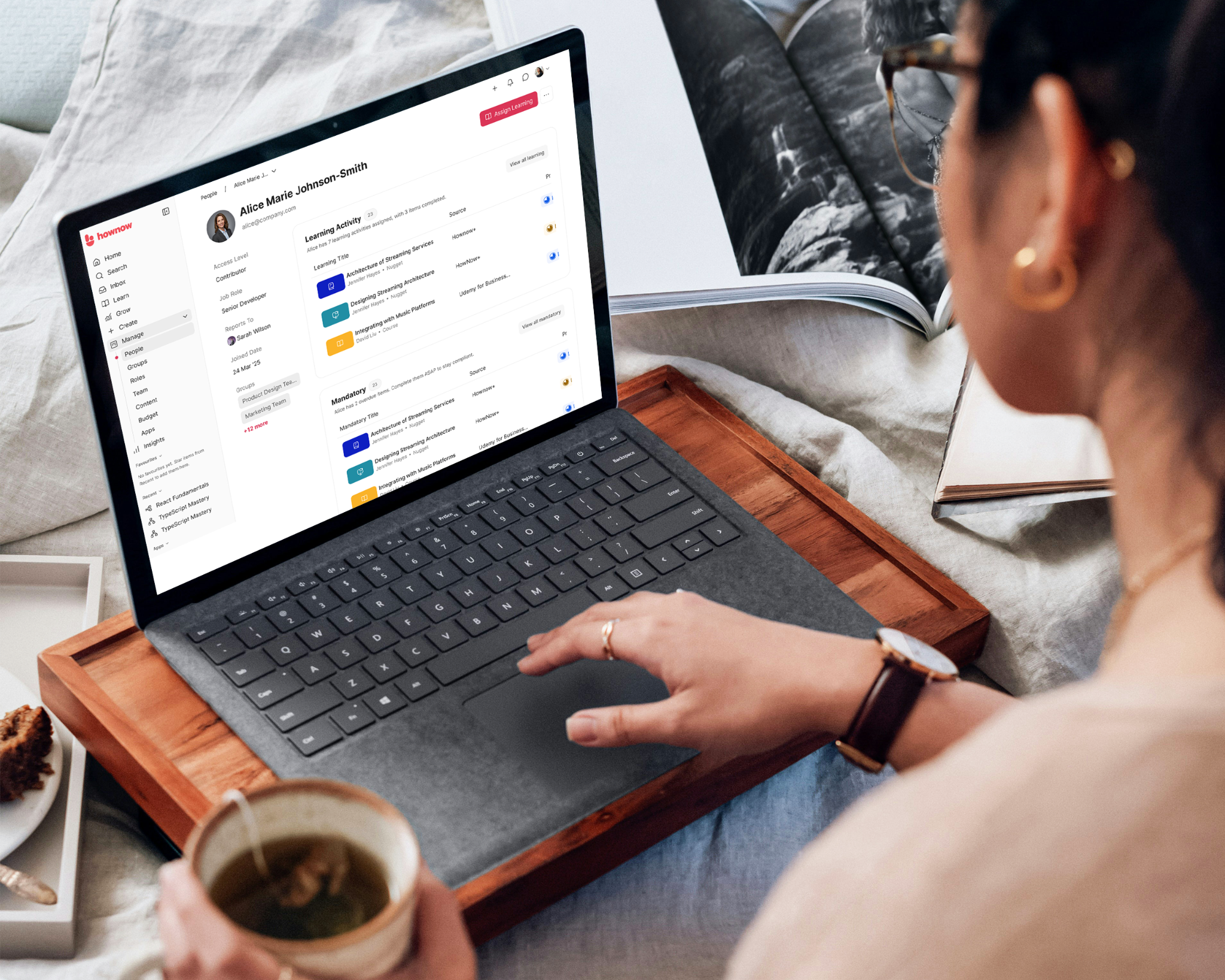
HowNow is an AI-native learning platform that brings courses, coaching, communities and career paths into one place. It replaces the traditional LMS and personalises learning to each person's skills.
The difference starts with skills. HowNow's skills graph reads skills from real work, not a self-assessment form nobody fills in. There's no six-month taxonomy project to run first.
AI runs through every feature. Guru, the AI coach, answers questions from your own content, runs role-plays and builds dashboards on request. HowNow Plus adds 50,000+ skills-mapped resources, and it plugs into ChatGPT, Copilot and Claude so your AI tools draw on trusted content.
Key Features
- AI pathway builder: Personalised learning paths built from skills gaps, role context, and business goals. Automatically.
- Adaptive learning: Every learner gets a personalised path based on their role, skills, and progress. 1:1 learning at scale.
- AI curation: The right content found, tagged, and organised from your internal sources and external libraries. Surfaced automatically.
- Learning communities: Peer expertise made visible, structured, and searchable. Your best knowledge captured and available to everyone.
- Skills graph: Every skill and every gap visible. The intelligence that connects performance gaps to the learning that will close them.
- Career paths: Every employee sees their skills, their gaps, and where they can grow. Real paths that drive engagement without mandating it.
- AI Performance coaching: Answers, practice, feedback, and proactive coaching, delivered where your people already work. Connected to real work signals.
- Trusted content: Expert knowledge your AI can actually use. Every recommendation grounded in real expertise, not generic results.
- Unified Search: Pulls any course, document, or expert answer from one search box across your tools.
- In-flow delivery: Serves learning inside Slack, Teams and the browser, where people already work.
Pricing
HowNow doesn't publish a price list. Pricing is quoted per organisation after a demo, and there's an ROI calculator on the pricing page if you want to model the investment first.
- Essentials - £60/user/year, Centralised learning with built-in compliance
- Pro - £80/user/year, Personalised learning for every role, powered by AI, with zero admin
- Plus - +£45/user/year, Curated learning from top providers, ready to use, skills-mapped, included in one subscription
Rating
G2: 4.5/5
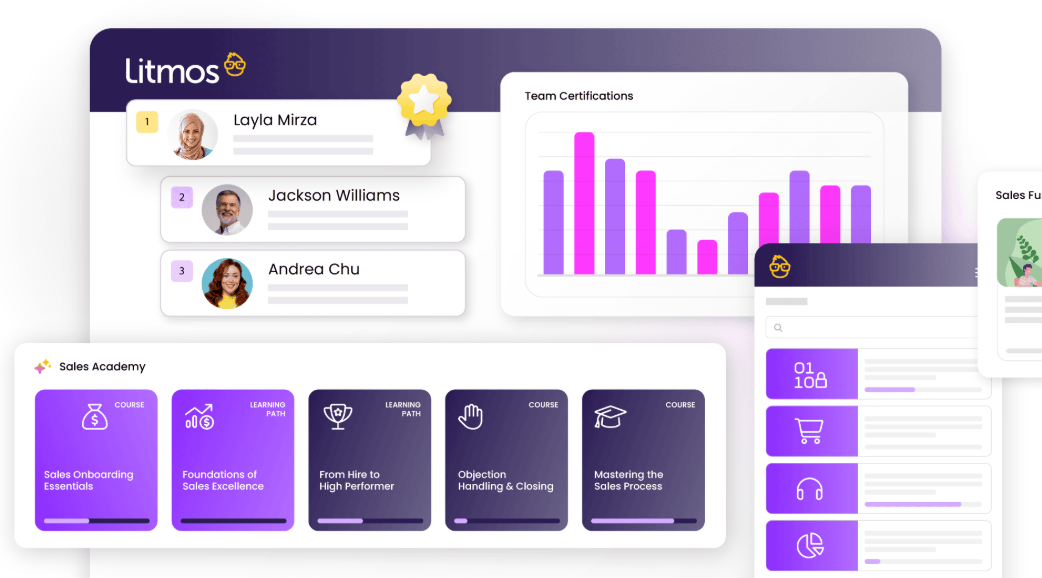
2. Docebo
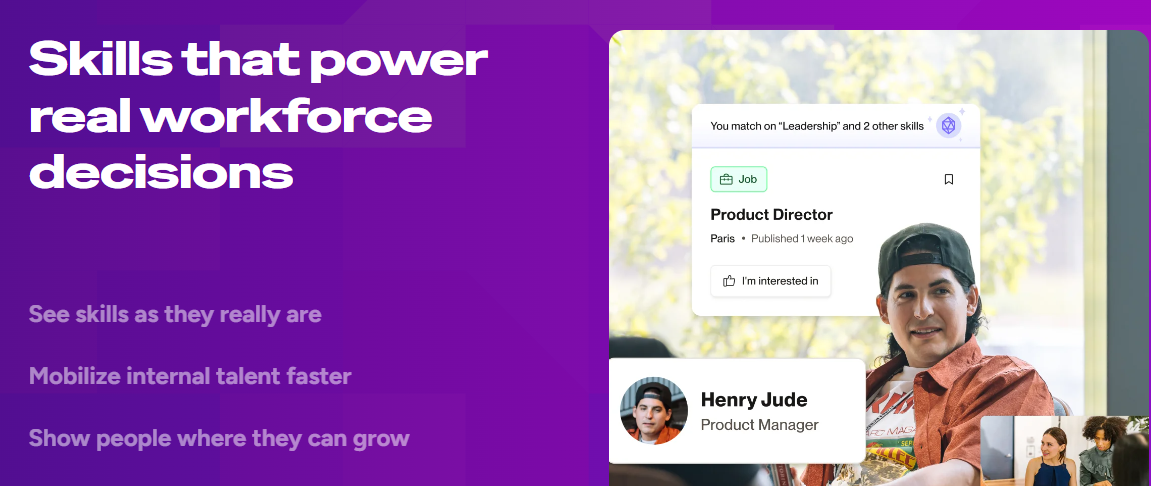
Docebo is an enterprise learning platform used by 3,500+ organisations, including PwC. Its strength is training employees, customers and partners from one system. In 2026 it bought 365Talents for skills intelligence and announced AgentHub. Our Docebo alternatives guide and Docebo vs Cornerstone comparison go deeper.
Key Features
- Harmony AI: Gives learners a 24/7 tutor and conversational search across the courses they can access
- AgentHub: Runs no-code AI agents on scheduled workflows such as compliance triage, launching autumn 2026
- Skills Intelligence: Detects skills and gaps across the workforce, powered by the 365Talents acquisition
- Skills-based internal mobility: Employees are matched to roles, projects and opportunities on verified skills rather than job titles or CVs
Pricing
Docebo doesn't publish prices. Its Elevate and Enterprise tiers are custom-quoted and billed on active users. It's aimed at organisations training 250+ learners, with a one-year minimum.
Rating
G2: 4.3/5
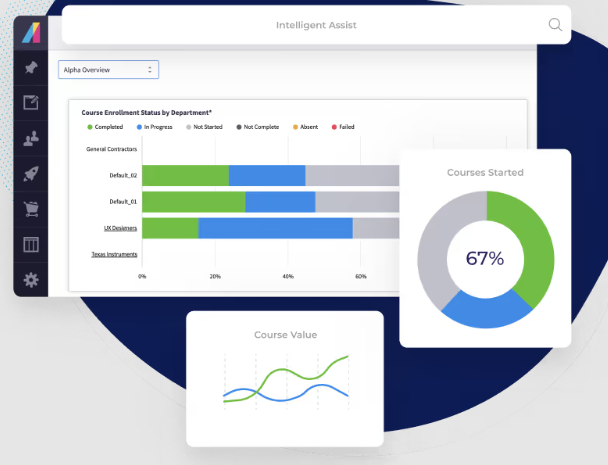
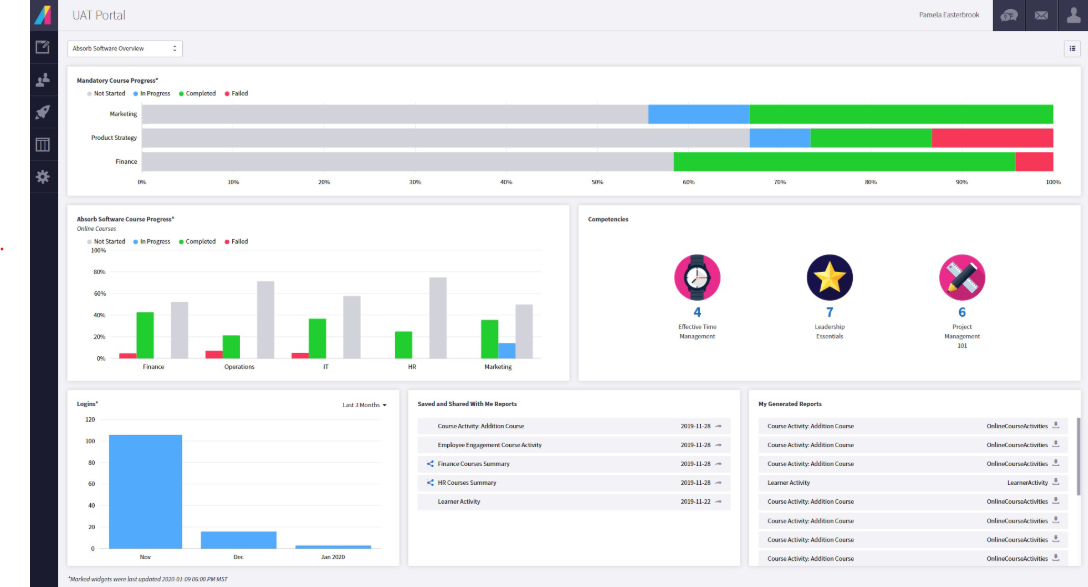
3. Absorb LMS
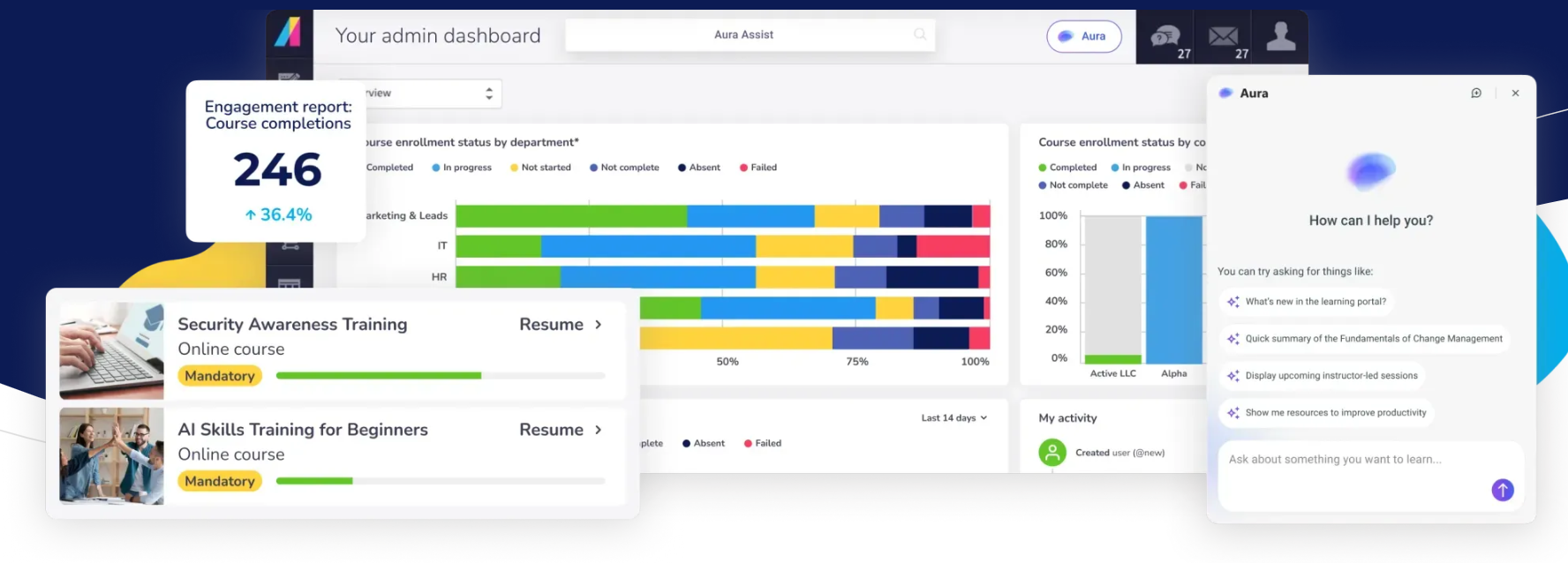
Absorb LMS is used by 3,500+ organisations, including Sony, Samsung and Toyota. It covers employee training, compliance and customer education from one system.
In May 2026, it launched Absorb Aura, a set of AI agents for learners and admins. Aura is grounded in each customer's approved content and isolated by tenant, which helps when IT asks where training data goes.
Key Features
- Absorb Aura: Deploys AI agents for learners and admins, grounded in your approved content and isolated by tenant
- Aura Create: Builds and updates courses through conversation instead of a blank authoring screen
- Absorb Skills: Maps learning to 12,000+ job skills and 200+ competencies, for Amplify Max subscribers
- AI recommendations and search ranking: The learner dashboard suggests courses based on each person's data and interests
Pricing
Absorb doesn't publish pricing.
Rating
G2: 4.6/5
4. 360Learning
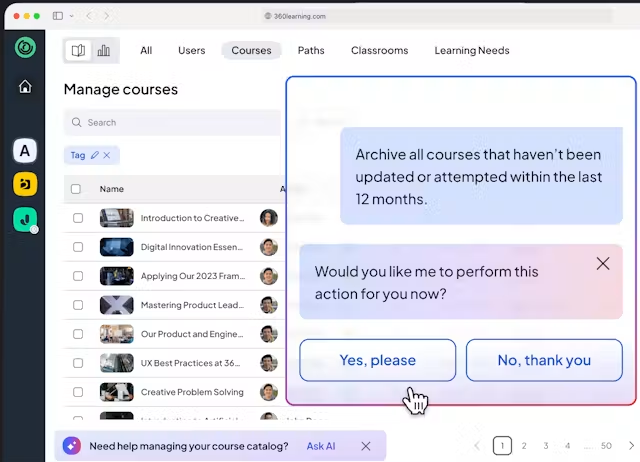
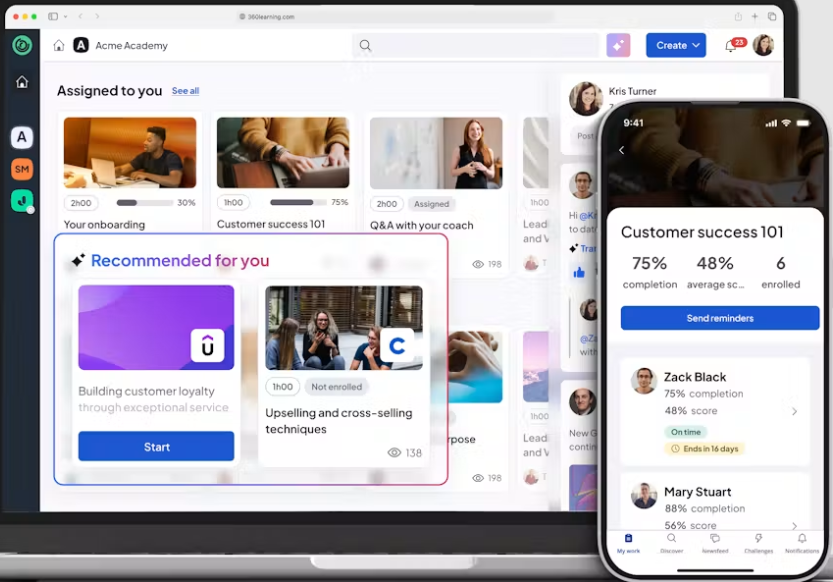
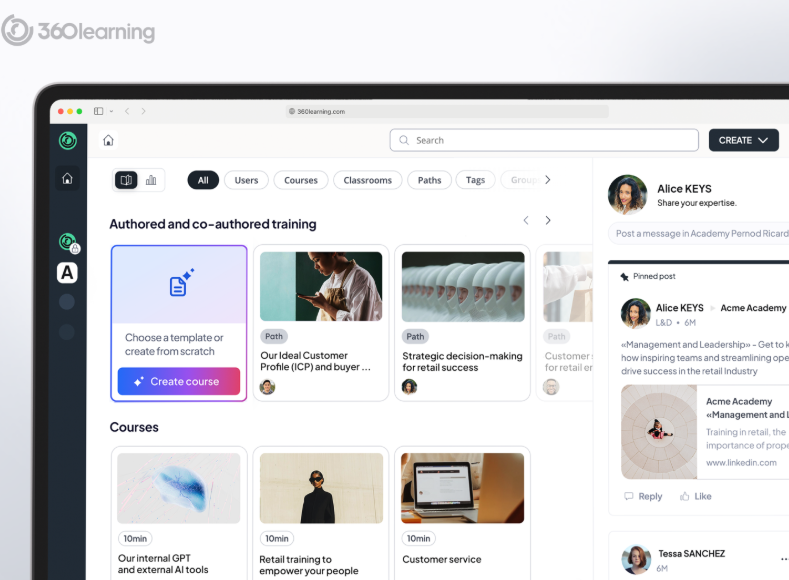
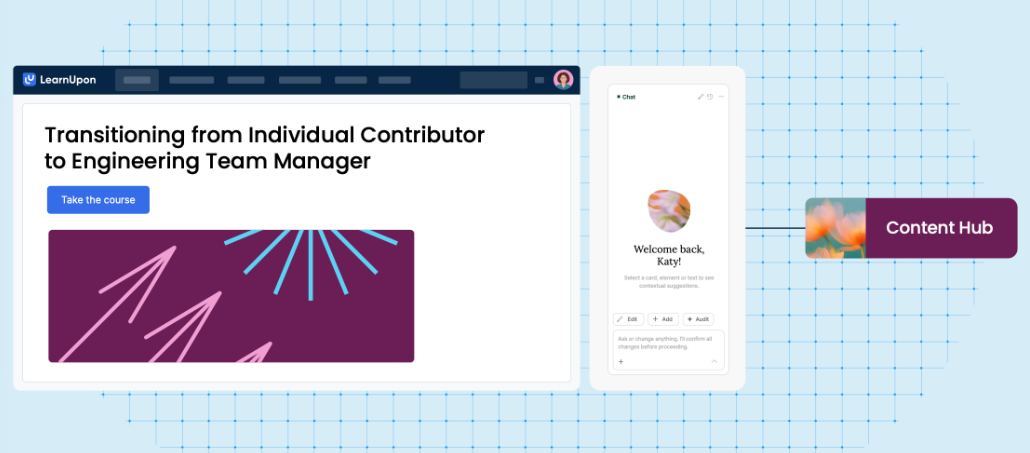
360Learning is a collaborative learning platform used by 2,500+ organisations, including Cisco and Michelin. Subject-matter experts build courses directly, with L&D keeping quality control.
Its AI Companion, launched in October 2025, gives learners personalised search and recommendations on every plan. AI coaching and role-play are on the roadmap but not live yet.
Key Features
- Collaborative authoring: Lets experts across the business co-author courses, included on every plan
- AI Content Builder: Generates courses and questions from your existing source material
- AI Companion: Gives learners personalised search, recommendations and real-time help
- Agentic automation: An AI agent handles catalogue clean-up, reporting and instant course translations, with conversational BI for asking data questions in plain language.
Pricing
360Learning publishes its Team plan at $8 per user per month for up to 100 users, billed monthly with a 30-day free trial. Business and Enterprise plans are custom-quoted.
Rating
G2: 4.6/5
5. Disprz
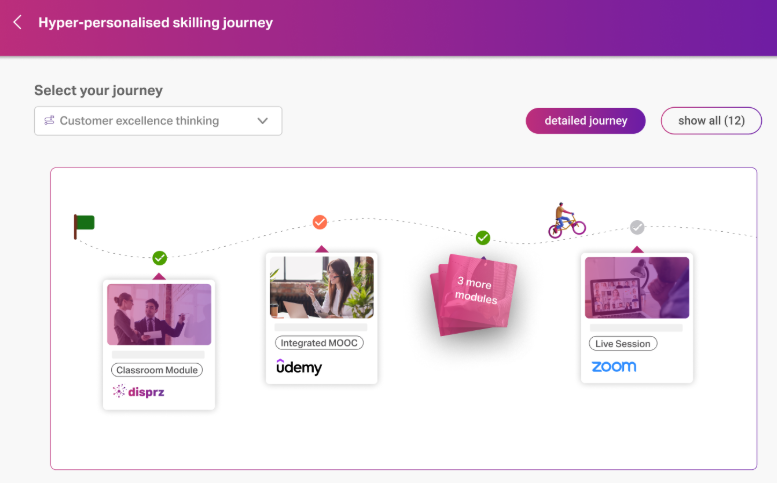
Disprz is an AI-native learning and skilling platform used by 500+ enterprises, including Amazon, EY and PUMA. It combines an LMS, LXP and skills engine, built mobile-first for frontline workforces.
Its Atomic Skills Model maps granular skills and proficiency levels to each role, then builds pathways and career plans from the gaps. Turo, its agentic content builder, speeds up course creation on usage-based credits.
Key Features
- Atomic Skills Model: Maps granular skills and proficiency levels to every job role
- AI pathways: Builds personalised learning journeys, career paths and development plans from skill gaps
- Turo: Uses agentic AI to build learning content at scale, charged on usage credits
- Blended learning delivery: Runs instructor-led, virtual, microlearning and on-the-job training from one LMS, with automated workflows, approvals and certification tracking
Pricing
Disprz publishes an entry price. Essentials starts at $2 per learner per month, while Enterprise, which adds skills, career paths and AI content, is custom-quoted.
Rating
G2: 4.4/5
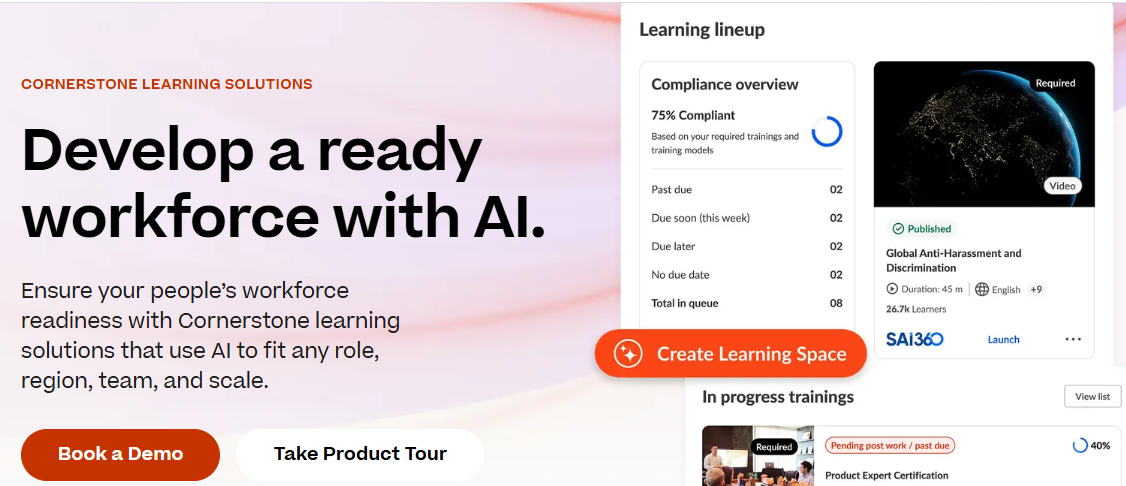
6. Cornerstone OnDemand
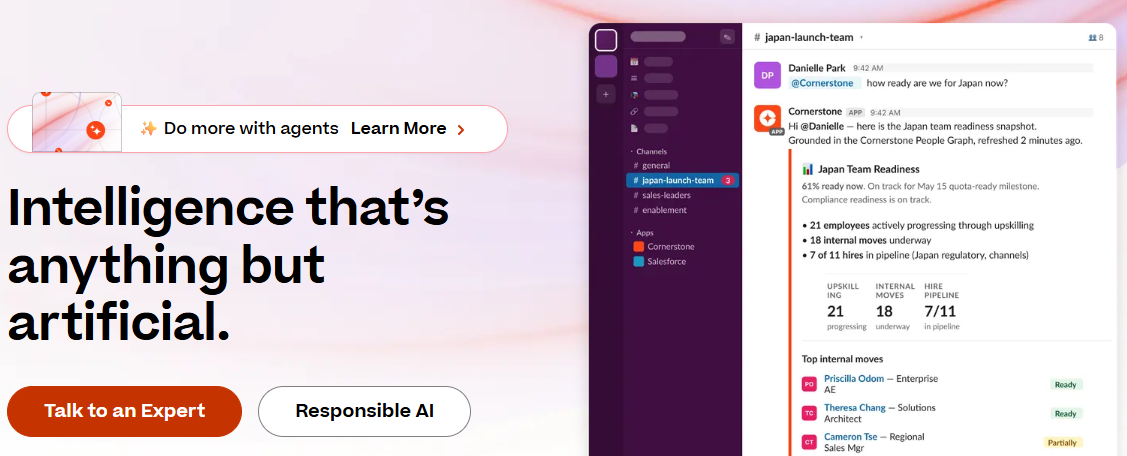
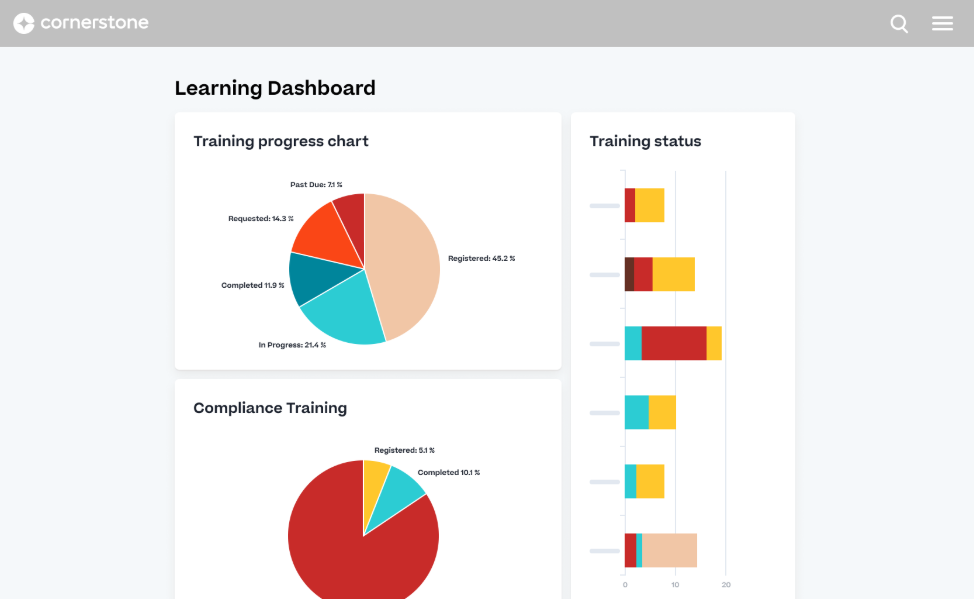
Cornerstone is one of the biggest names in enterprise learning, used by around 7,000 organisations in 186 countries. Its suite covers learning, performance, recruiting and succession, assembled through acquisitions over many years.
In May 2026 it launched Cornerstone Workforce AI, which combines workforce and labour-market data to target learning. The breadth suits HR-led global programmes, though reviewers often find the platform heavy to run.
Key Features
- Workforce AI: Combines workforce and labour-market data to target learning and surface hidden talent
- People Graph: Pulls signals from HRIS, ATS, CRM and project tools to build skill profiles
- Readiness Agents: Runs agentic AI for workforce tasks, with links into Slack, Teams and Copilot
- Personalised recommendations: The platform learns what each person knows, what they're working on, and where they're heading
Pricing
Cornerstone doesn't publish pricing.
Rating
G2: 4.1/5
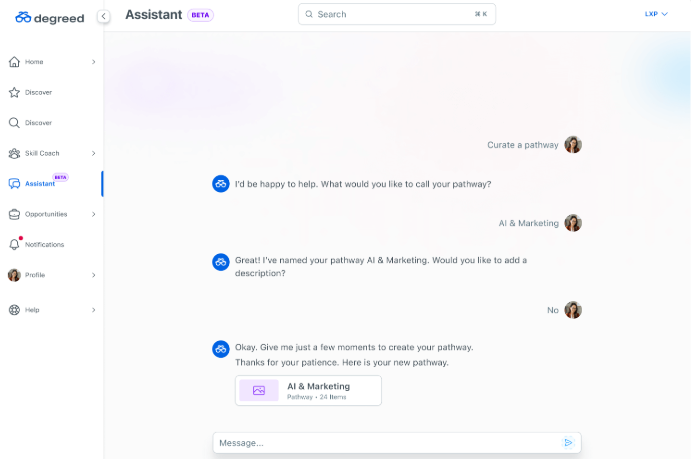
7. Degreed
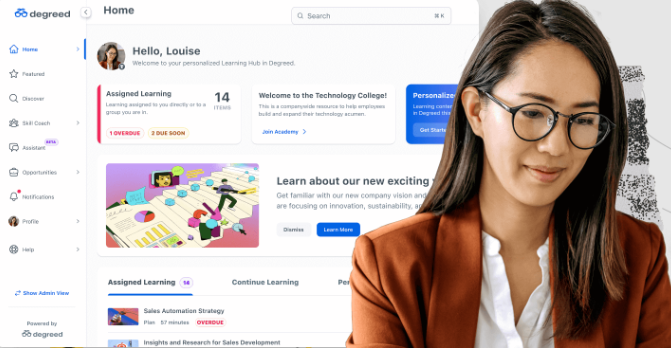
Degreed is a learning and skills platform with 10 million activated users in 160+ countries. It brings content from thousands of providers into one experience, with customers including HSBC and Ericsson.
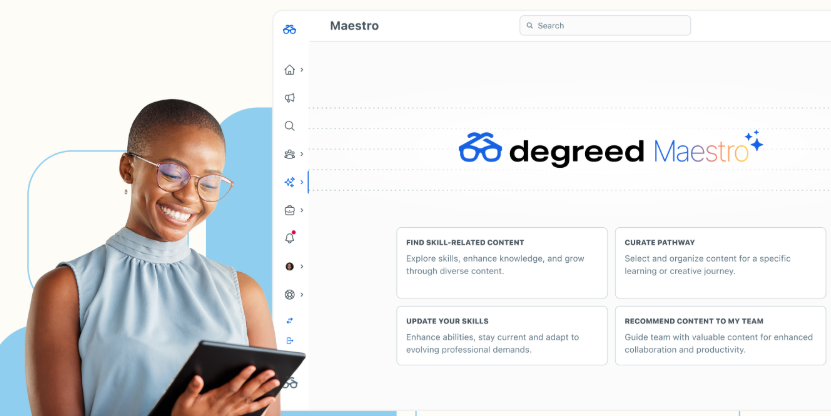
Its AI coach, Maestro, works in text and voice and runs role-plays with structured feedback. Capgemini used Degreed to train 150,000 employees in 10 weeks. We've also written about Degreed alternatives.
Key Features
- Maestro: Coaches people by text or voice, runs role-plays and curates pathways
- Skill Review: Assesses proficiency through adaptive, behaviour-based questions developed with psychometricians
- Degreed Academies: Runs cohort-based programmes for longer, structured development
- Maestro Studio: L&D teams build and launch custom AI coaches, roleplays, quizzes, surveys and forms in minutes
Pricing
Degreed doesn't publish prices.
Rating
G2: 4.3/5
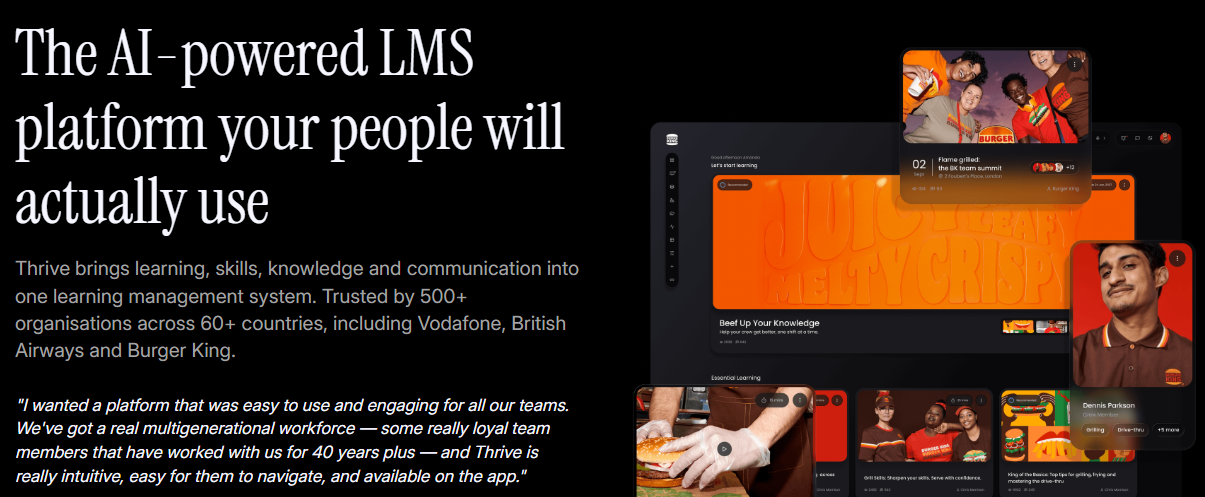
8. Thrive Learning
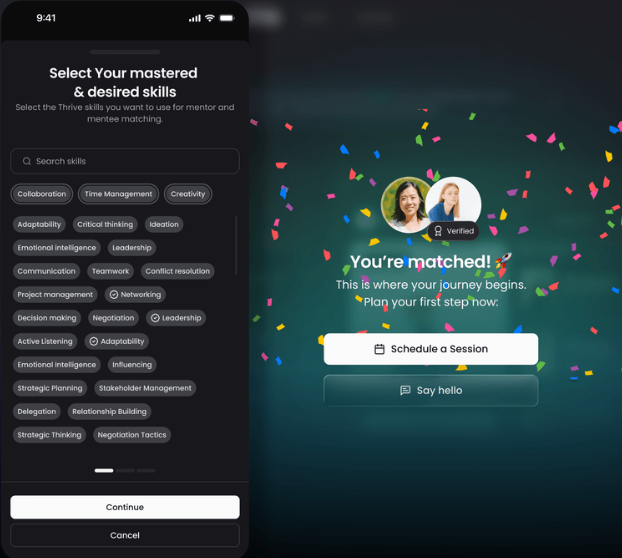
Thrive is a UK-built L&D platform used by 500+ organisations and 5 million people in 60+ countries. It combines learning, mentoring, communities and internal comms, with customers including Volvo and British Airways.
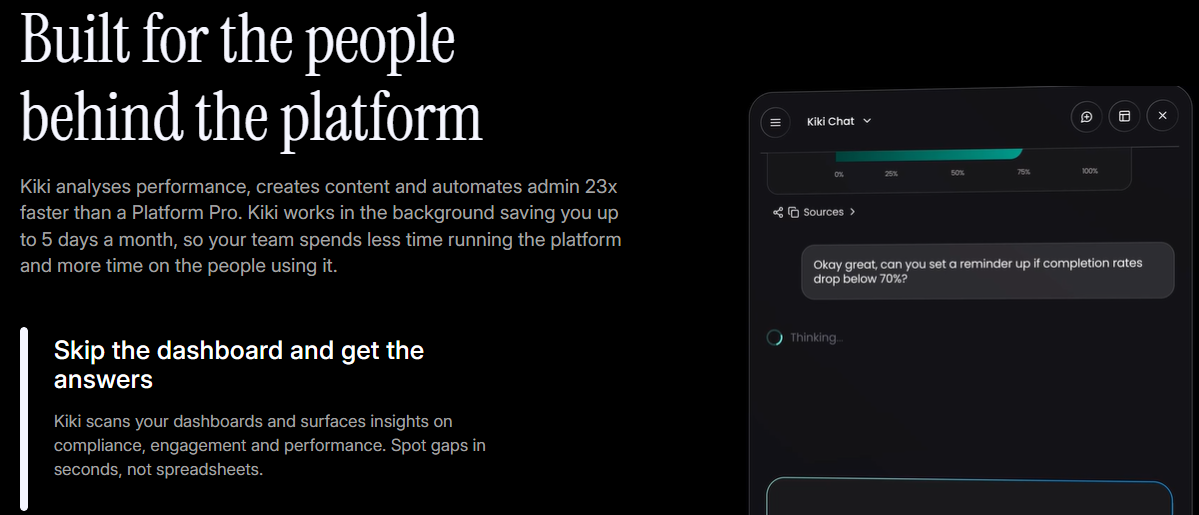
Its AI agent, Kiki, comes included at no extra cost and covers coaching, content creation, analytics and admin. Mentoring is built in too, which saves buying a separate tool. Our Thrive alternatives guide goes further.
Key Features
- Kiki AI agent: Works in five modes, Coach, Creator, Analyst, Admin and Assistant, at no extra cost
- Mentoring: Matches mentors and mentees, sets goals and tracks impact
- Skills and pathways: Maps skills to roles, finds gaps and builds pathways to close them
Pricing
Thrive publishes pricing through an online calculator, with no form or sales call needed. Larger tiers still go through a demo.
Rating
G2: 4.5/5
9. Skillsoft Percipio
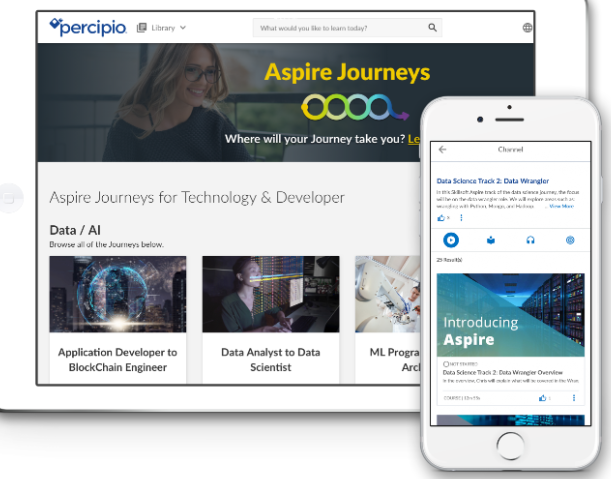
Skillsoft Percipio is an AI-driven skills platform backed by one of the largest content libraries in corporate learning, with 325,000+ learning assets. Skillsoft says 60% of the Fortune 1000 use it.
Its AI role-play tool, CAISY, lets people rehearse difficult conversations and get scored feedback in Practice mode. Percipio suits organisations that value library breadth over bespoke, skills-mapped learning.
Key Features
- CAISY: Lets people rehearse conversations with AI in Practice, Role Model and Guiding modes
- AI Coach: Turns development needs into coaching goals, aligned to ICF standards
- Skill Benchmarks: Assesses skills to show gaps across teams
- AI content creation: L&D teams build custom courses, simulations and assessments in minutes, then update them as priorities shift
Pricing
Skillsoft's self-serve figures sit on its pricing page.
- Individual: $25 per month, or $269 per year, with a 45-day free trial
- Teams: $20 per seat per month billed annually, up to 300 seats, with a 30-day free trial
- Enterprise: custom pricing above 300 seats
Rating
G2: 4.1/5
10. LinkedIn Learning
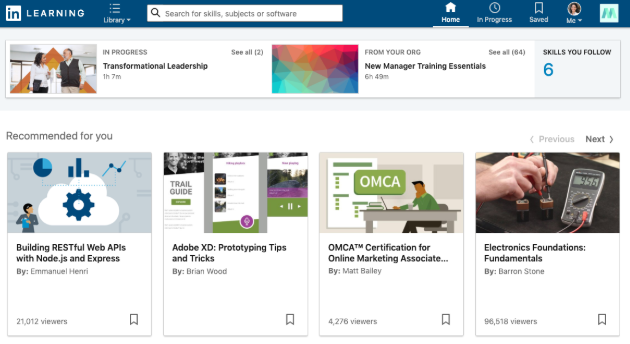
LinkedIn Learning offers 24,000+ expert-led courses, backed by skills insights from LinkedIn's network of more than 1 billion members. Customers include LEGO and Siemens.
Its AI coach answers questions from LinkedIn Learning courses and links to the source course, so people can check what they're told. Many teams run it inside another platform, for example through HowNow’s LinkedIn Learning integration.
Key Features
- AI-powered coaching: Answers questions using LinkedIn Learning courses, with a link to the source course
- AI role play: Lets people practise workplace conversations by voice or text, on Enterprise and Premium plans
- Skills insights: Draws on LinkedIn's member data to show trending and in-demand skills
- AI-assisted content curation: AI-powered search helps admins and learners find the right content quickly, instead of browsing thousands of courses
Pricing
- Teams: $379.88 per licence per year, for 2 to 20 licences, with a one-month free trial
- Enterprise and Career Hub: no published price, contact sales
Rating
G2: 4.4/5
Looking for the top AI enterprise learning software?
Your three-year LMS contract is up for renewal, and the engagement numbers are hard to defend. Every vendor on your shortlist says it has AI. For some, that means a coach that knows your business. For others, it means a button that writes quiz questions.
Most buying mistakes happen in the gap between those two. So we compared 10 platforms on what the AI actually does, how each handles skills, cost, and G2 reviews.
Why listen to us?
We build HowNow for L&D teams who have outgrown a traditional LMS. We see which AI features change how people learn, and which only shine in a demo.
Hotelplan mapped 300+ job roles to skills in one month, reached 99% activation and saw 78% of employees feel confident in their role skills. Infinity Works hit 97% activation within four months.
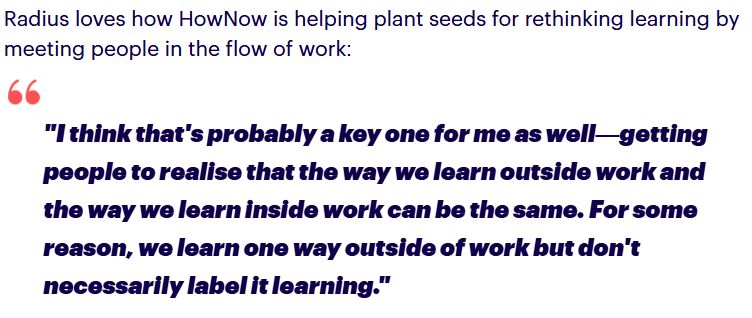
Trainline halved the time its people spend on compliance training, and Operatix ramped new starters 33% faster. Radius upskilled 3,000 managers, and FitFlop took positive sentiment on access to L&D from 0 to 69%.
So we judge AI platforms the way our customers do: does the AI get people to the right learning faster, and can L&D prove it? See more on our customer stories page.
What is AI enterprise learning software?
AI enterprise learning software is a corporate learning platform that uses AI to personalise, deliver and measure employee development. It maps learning to each person's role and skills, recommends next steps and coaches people as they work.
Why is AI enterprise learning software important?
- People actually engage: Generic catalogues get ignored. When learning maps to role-specific skills, people open it because it helps with this week's work.
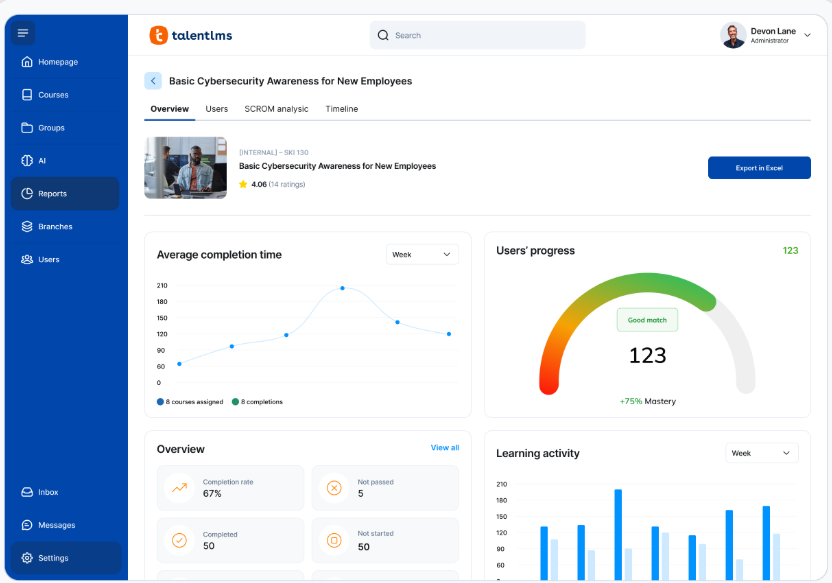
- L&D spends less time on admin: Manual assignment, completion chasing and hand-built reports eat hours every week. AI handles recommendations, nudges and dashboards instead.
- Skills become visible: Most organisations can't say what their workforce can do today. Skills-aware AI builds that picture, which is why skills-first learning is becoming the default.
- Compliance is easier to prove: Automated assignment, tracking and renewals keep audit evidence in one place, so nobody stitches spreadsheets at midnight.
- Learning connects to business results: Leaders want proof that training moved performance. Joined-up learning, skills and performance data provides it.
Selection criteria: how we evaluated
Every vendor now calls itself AI-powered, so we looked past the labels. We scored each platform on five criteria.
- AI depth: We checked whether AI runs through the whole platform or sits in one corner, and what data feeds it. AI trained on real work signals beats a chatbot added to a course catalogue.
- Skills approach: Looked at how each platform builds its picture of employee skills. Skills read from real work stay current, while self-reported forms go stale the week they're filled in.
- Content: We weighed the size, quality and skills-mapping of both internal and off-the-shelf content. A huge library means little if people can't find what closes their gaps.
- AI governance: Asked where your data goes, whether AI answers are grounded in approved content, and how much control admins have. This matters most for regulated teams.
- Pricing and proof: We rated how open each vendor is about pricing, read what G2 reviewers say, and looked for named customers showing real results.
No platform wins on every criterion. The right choice depends on which of these matters most to your team today.
How to choose
Start with the problem, not the feature list. If you're a mid-to-large enterprise that wants learning, skills, coaching, and content in one AI-native platform, HowNow is built for that. If you train customers and partners at real scale, Docebo or Absorb are worth a look.
If expert-led content matters most, 360Learning has a transparent entry price. Frontline-heavy organisations should shortlist Disprz, while global enterprises wanting recruiting and succession in one suite will lean towards Cornerstone. Skillsoft Percipio and LinkedIn Learning suit teams that mainly need library breadth.
Whatever you choose, ask each vendor to show the AI working on your own content.
Choose AI that changes how your people learn
Every platform here uses AI in some form. The real question is whether it knows your people's skills, works from your content and proves results.
HowNow was built for exactly that. Hotelplan hit 99% activation, Trainline halved compliance training time, and TomTom reached 100% onboarding completion. Each came from one platform joining learning, skills, coaching, and reporting.
Ready to see it working on your own content? Book a demo and see HowNow in action.
FAQs
What's the difference between AI enterprise learning software and a traditional LMS?
A traditional LMS hosts courses and tracks completions. AI enterprise learning software personalises learning to each person's role and skills, recommends what to do next and coaches people in the flow of work.
How do I know if an AI learning platform is trustworthy?
Check whether the AI grounds its answers in your approved content and whether your data stays within your tenant. Ask who controls what the AI can see. Then test it live on your own documents during the demo.
How much does AI enterprise learning software cost?
It varies widely. 360Learning's Team plan starts at $8 per user per month, and Disprz Essentials at $2 per learner per month. HowNow, Docebo, Absorb, Cornerstone and Degreed quote pricing based on your size and needs.
Can AI enterprise learning software handle compliance training?
Yes. The strongest platforms automate assignment by role, track renewals and keep audit trails in one place. With HowNow's compliance training tools, you can assign, track and prove completion without rebuilding spreadsheets before every audit.