How the Line Manager View Transforms Employee Development

Author:
Aaron Spencer
PUBLISHED ON:
September 7, 2025
September 24, 2025
PUBLISHED IN:
Product Updates

We expect our line managers to be expert coaches, but too often, we're asking them to do it blindfolded.

Closing the skills gap isn't just an L&D initiative; it's a manager-led conversation. But for those conversations to be truly effective, they need to be powered by data, not guesswork. This is the crucial link between employee development and real business performance.
‍

What is HowNow’s Line Manager View?‍

A Manager is someone responsible for taking others under their wing, and doing what they can to ensure those team members are focused on professional targets, aligned with personal goals and have the skills necessary to grow their performance.

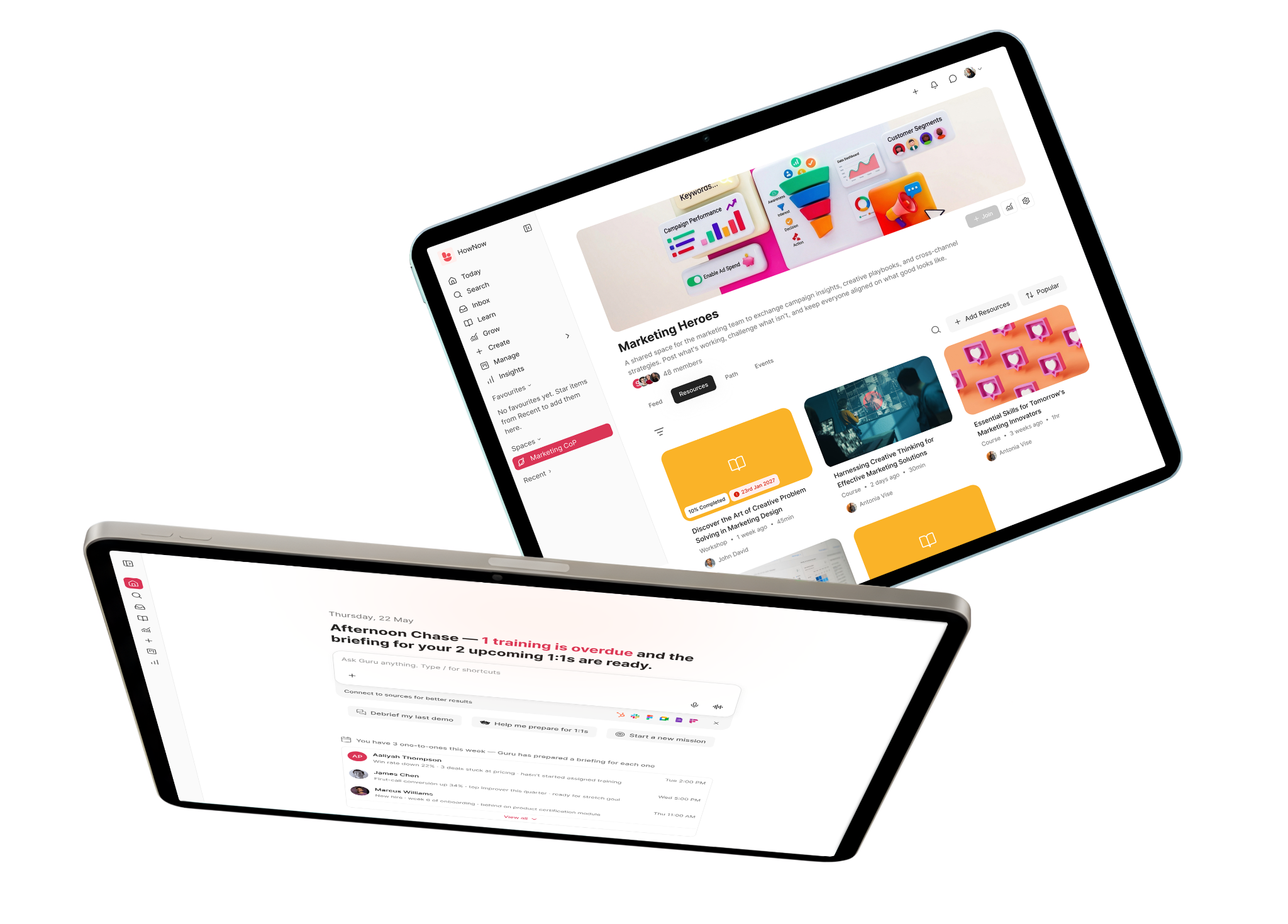
HowNow’s Line Manager View (LMV) does just that, by opening up a new way for Managers to aid their Direct Reports in achieving goals set by the Line Manager and by the Direct Reports themselves. It’s where all of an employee’s development can be tracked in one place, simplifying the way in which data can be collected and shared for seamless reporting.

From streamlining relevant content for a team member’s job role to reviewing and assigning skills that propel them down their desired career path, the LMV brings user management and collaborative relationships closer together. 

‍

Why is it important?

One of the biggest challenges being faced by teams across the world of work is that of skills gaps and how to build confidence in employees who have them. We know that closing such gaps requires a tailored approach for each individual on a team, but also needs to keep business goals in mind. 

Line Manager View solves this problem by giving leaders the ability to personalise the content assigned to their Direct Reports (keeping it relevant to the projects they’re working on and the level they’re at in the business), and identify weaknesses (such as the quantity or diversity of specialised content being offered to them, for their job role).

It’s an integral part of the management of teams, as it tackles many of the real-time concerns raised by both the L&D Managers we work with at HowNow, and those from across the L&D industry - some of these key points include the following…

‍

Young people are concerned about entering the workforce

Direct Reports can often be recently onboarded interns or junior-level employees who lack the confidence to take on tasks (often due to a self-belief of not having the required skills to do the job). They need to know where to take their first steps, and what should be their top priority as part of a new way of working: from studying to now being in a professional setting. 

Assigning Skills in the LMV ensures that your younger team members know exactly what they’re working towards, and can track their progress via completion and improved Skills Levels. Upskilling for work will be new to them, so the LMV eliminates that overwhelming feeling of where to begin.

‍

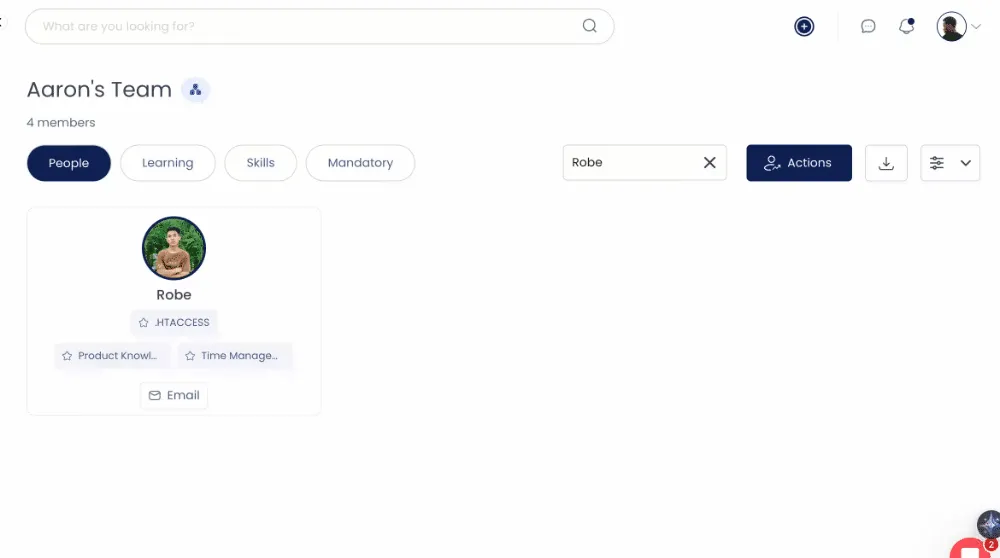
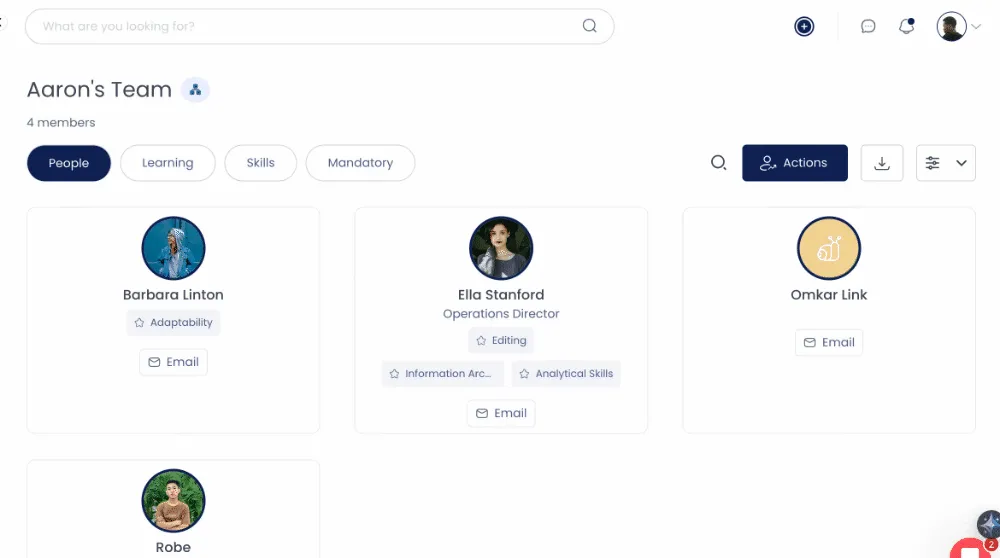
Robe is an intern on the Product Team, so can see that his learning needs to focus on the Skills Required for this new position: managing his time, understanding product management and the basics of product research.

‍

Long-term employees lack the knowledge for senior roles

Businesses continuously focus on developing strong leadership teams. This means taking mid-level leads, and giving them access to content that trains them on essentials, such as empathy, strategy building and department management. 

You can use the Line Manager View to see which themes and content types your Direct Report (who is a mid-level lead) is currently assigned to, and ascertain whether they meet the criteria needed for them to level up to that senior position. If they need more Pathways on empathy or to attend workshops on conflict management, you can review what they already have and assign new material accordingly.

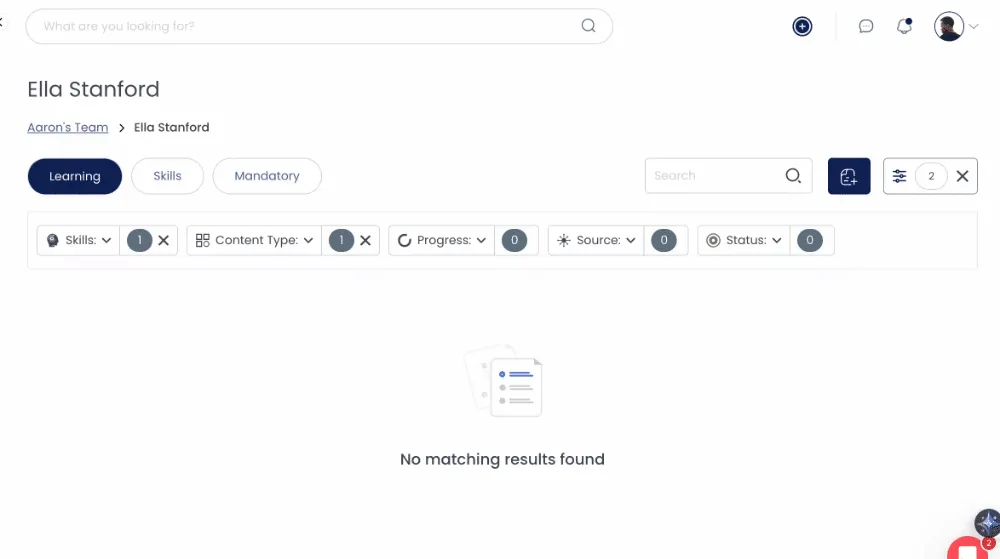
Ella doesn’t have any key leadership content assigned to her in the form of a Pathway. Knowing this, her Line Manager adds her to the right content (whether a Pathway or otherwise).
‍

‍

Building Expertise within the company

Tracking an individual’s Skill Level progression across a series of months gives Managers the power to select team members as Experts, creating content collaborators and key individuals to approach for knowledge sharing.  

‍

‍

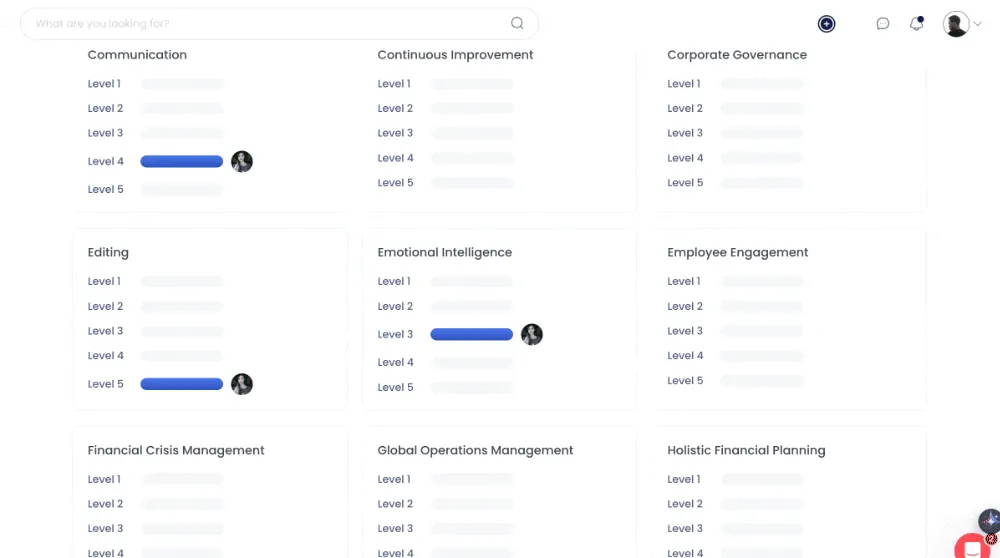
Ella has raised her level in Emotional Intelligence from 1 to 3, bringing her to an Expert level, after months of learning. 

‍

Pathways can be used to pinpoint the exact learning journey a Direct Report needs to go on to become even more knowledgeable in their field. You can track their progress via the LMV and send messages to remind them to complete their Pathway (or any content) by agreed-upon timeframes. From then onwards, they can achieve their Expert status as their Skill is reviewed again, and given a higher level.

Line Manager View can also allow you to improve the leadership of your Direct Report’s own reportees (known as Indirect Reports). So, if a Manager is a Direct Report and they want to increase the leadership or expertise of their own direct report, then Line Managers can also help out, leading to team members feeling supported.

‍

‍

Line Manager > Direct Report > Indirect Report

‍

Building rapport, trust and support

The Line Manager View takes a relationship between Manager and reportee, which in some environments can often be quite formal or mechanical, and ensures that the Direct Report feels supported, and that they can trust their Line Manager’s judgement. 

Assigning content that can be tracked allows team members to see their Line Managers taking an interest in their professional maturity. It shows that voices are being heard, and action is being taken.

  • Are these Nuggets bringing value to my DR? 
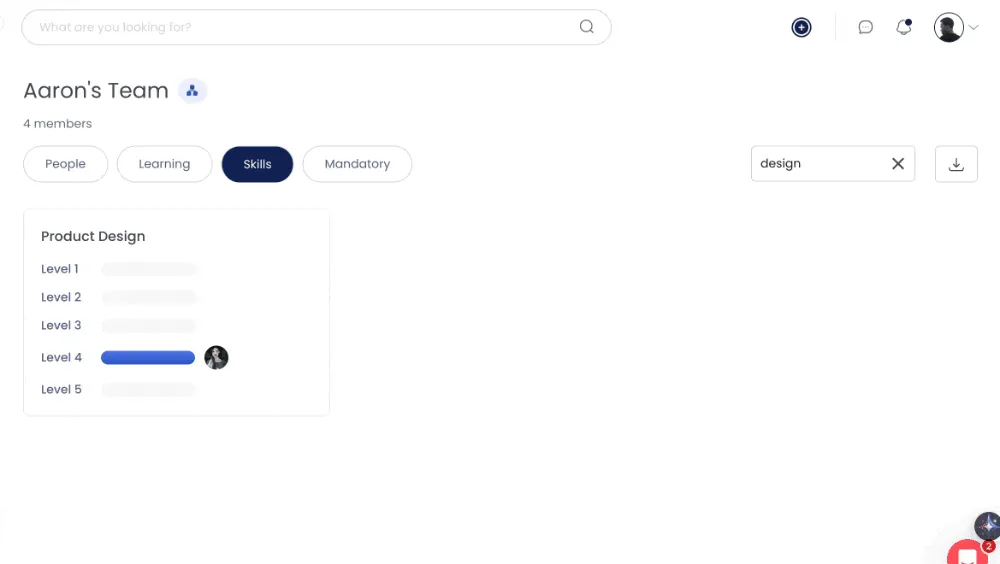
  • They’ve expressed an interest in learning more about Design: do they have such content assigned to them? 
  • They struggled in the meeting last week: Do I need to assign some Public Speaking content?

‍

Teaching DRs to understand their own learning

It’s normal for employees to ask: “Why am I learning this?” It shows a healthy level of awareness of their time and productivity. This is where the Line Manager View can give managers what they need to explain to their Direct Reports exactly why they are paired with certain types of content.

Keeping abreast of what content is already accessible to DRs, empowers Line Managers to rationalise the content chosen for individuals to learn. If your skill is only a Level 2, but your job role requires you to be a Level 4, then more content needs to be assigned to you, even if you’ve completed some essentials already.

‍


‍

Ella has been assigned numerous content around Design, so she can take her skill level from a 4 to 5.

‍

Compliance Training Completion

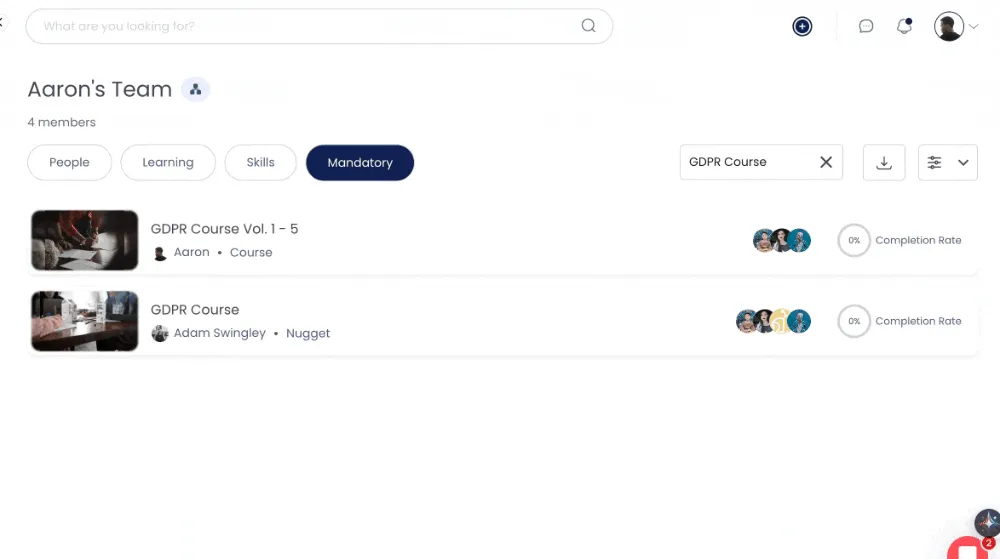
Use the Line Manager View to track mandatory training (often Compliance), bringing peace of mind to the wider business. If there are Courses that need to be completed before a specific time, this page makes it easier to spot which ones and let Direct Reports know about them. 

‍

‍

All Direct Reports shown here haven’t completed any GDPR material. The Line Manager could bulk-message these team members with a reminder to get started and of the deadlines.

‍

Want to learn more?

‍

For existing customers: To learn even more about the Line Manager View feature, contact your account’s Customer Success Manager, who’ll be able to guide you through the best ways to apply some of the examples given in this article, to fit your L&D team’s use case.

‍For those new to HowNow: You can take a tour of the page with our team, who’ll be happy to speak to you about your management needs. Book a demo to get started.

Want a 5x better engagement than a traditional LMS
Demo Hownow

Be in the know

More articles

Quick summary

‍

Every enterprise learning platform now claims AI, but few build it into how skills, content and coaching work. HowNow leads this list of the top AI enterprise learning software, with a skills graph, adaptive pathways and an AI coach in one platform. 

Docebo suits large organisations training customers and partners alongside employees. Absorb LMS fits teams that want AI agents grounded in their own approved content.

‍

‍

1. HowNow

‍

HowNow is an AI-native learning platform that brings courses, coaching, communities and career paths into one place. It replaces the traditional LMS and personalises learning to each person's skills.

The difference starts with skills. HowNow's skills graph reads skills from real work, not a self-assessment form nobody fills in. There's no six-month taxonomy project to run first.

AI runs through every feature. Guru, the AI coach, answers questions from your own content, runs role-plays and builds dashboards on request. HowNow Plus adds 50,000+ skills-mapped resources, and it plugs into ChatGPT, Copilot and Claude so your AI tools draw on trusted content.

‍

Key Features

  • AI pathway builder: Personalised learning paths built from skills gaps, role context, and business goals. Automatically.
  • Adaptive learning: Every learner gets a personalised path based on their role, skills, and progress. 1:1 learning at scale.
  • AI curation: The right content found, tagged, and organised from your internal sources and external libraries. Surfaced automatically.
  • Learning communities: Peer expertise made visible, structured, and searchable. Your best knowledge captured and available to everyone.
  • Skills graph: Every skill and every gap visible. The intelligence that connects performance gaps to the learning that will close them.
  • Career paths: Every employee sees their skills, their gaps, and where they can grow. Real paths that drive engagement without mandating it.
  • AI Performance coaching: Answers, practice, feedback, and proactive coaching, delivered where your people already work. Connected to real work signals.
  • Trusted content: Expert knowledge your AI can actually use. Every recommendation grounded in real expertise, not generic results.
  • Unified Search: Pulls any course, document, or expert answer from one search box across your tools.
  • In-flow delivery: Serves learning inside Slack, Teams and the browser, where people already work.

‍

Pricing

HowNow doesn't publish a price list. Pricing is quoted per organisation after a demo, and there's an ROI calculator on the pricing page if you want to model the investment first.

  • Essentials - £60/user/year, Centralised learning with built-in compliance
  • Pro - £80/user/year, Personalised learning for every role, powered by AI, with zero admin
  • Plus - +£45/user/year, Curated learning from top providers, ready to use, skills-mapped, included in one subscription 

‍

Rating

G2: 4.5/5

‍

‍

2. Docebo

‍

Docebo is an enterprise learning platform used by 3,500+ organisations, including PwC. Its strength is training employees, customers and partners from one system. In 2026 it bought 365Talents for skills intelligence and announced AgentHub. Our Docebo alternatives guide and Docebo vs Cornerstone comparison go deeper.

‍

Key Features

  • Harmony AI: Gives learners a 24/7 tutor and conversational search across the courses they can access
  • AgentHub: Runs no-code AI agents on scheduled workflows such as compliance triage, launching autumn 2026
  • Skills Intelligence: Detects skills and gaps across the workforce, powered by the 365Talents acquisition
  • Skills-based internal mobility: Employees are matched to roles, projects and opportunities on verified skills rather than job titles or CVs

‍

Pricing

Docebo doesn't publish prices. Its Elevate and Enterprise tiers are custom-quoted and billed on active users. It's aimed at organisations training 250+ learners, with a one-year minimum.

‍

Rating

G2: 4.3/5 

‍

‍

3. Absorb LMS

‍

Absorb LMS is used by 3,500+ organisations, including Sony, Samsung and Toyota. It covers employee training, compliance and customer education from one system.

In May 2026, it launched Absorb Aura, a set of AI agents for learners and admins. Aura is grounded in each customer's approved content and isolated by tenant, which helps when IT asks where training data goes. 

‍

Key Features

  • Absorb Aura: Deploys AI agents for learners and admins, grounded in your approved content and isolated by tenant
  • Aura Create: Builds and updates courses through conversation instead of a blank authoring screen
  • Absorb Skills: Maps learning to 12,000+ job skills and 200+ competencies, for Amplify Max subscribers
  • AI recommendations and search ranking: The learner dashboard suggests courses based on each person's data and interests

‍

Pricing

Absorb doesn't publish pricing. 

‍

Rating

G2: 4.6/5 

‍

‍

4. 360Learning

‍

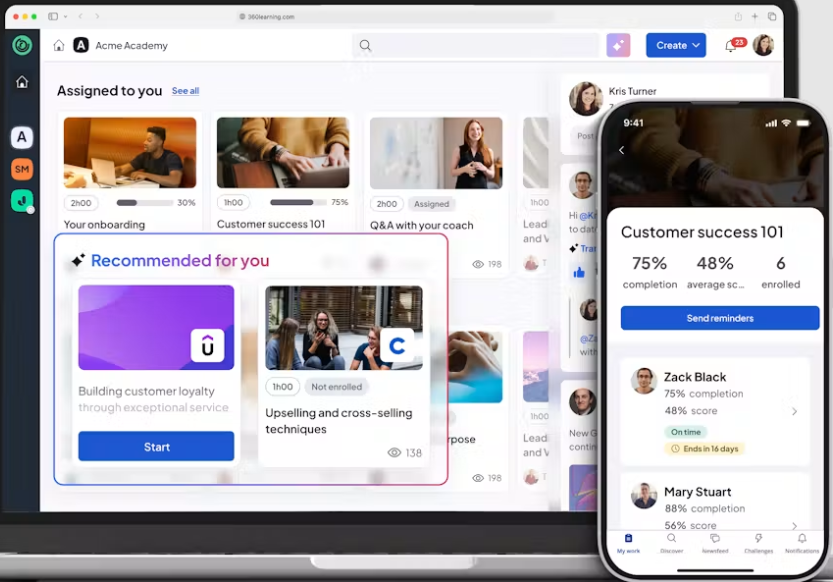
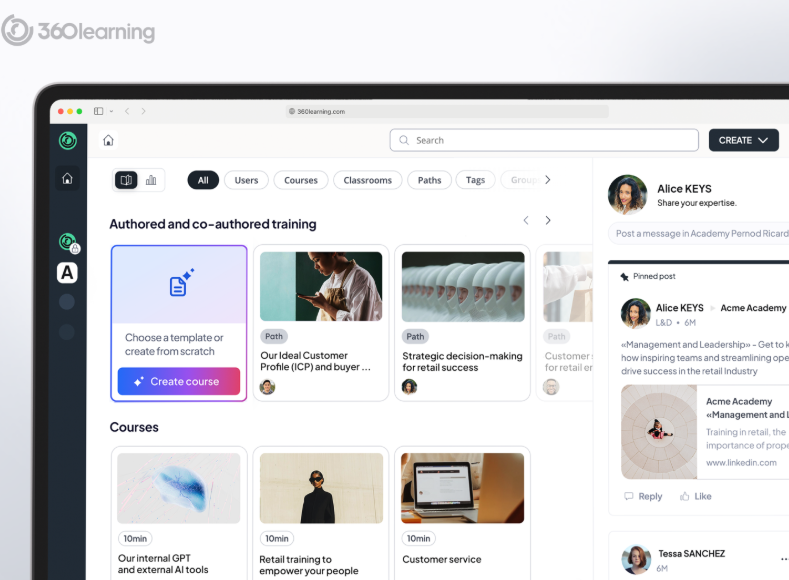
360Learning is a collaborative learning platform used by 2,500+ organisations, including Cisco and Michelin. Subject-matter experts build courses directly, with L&D keeping quality control.

Its AI Companion, launched in October 2025, gives learners personalised search and recommendations on every plan. AI coaching and role-play are on the roadmap but not live yet. 

‍

Key Features

  • Collaborative authoring: Lets experts across the business co-author courses, included on every plan
  • AI Content Builder: Generates courses and questions from your existing source material
  • AI Companion: Gives learners personalised search, recommendations and real-time help
  • Agentic automation: An AI agent handles catalogue clean-up, reporting and instant course translations, with conversational BI for asking data questions in plain language. 

‍

Pricing

360Learning publishes its Team plan at $8 per user per month for up to 100 users, billed monthly with a 30-day free trial. Business and Enterprise plans are custom-quoted.

‍

Rating

G2: 4.6/5

‍

‍

5. Disprz

‍

Disprz is an AI-native learning and skilling platform used by 500+ enterprises, including Amazon, EY and PUMA. It combines an LMS, LXP and skills engine, built mobile-first for frontline workforces.

Its Atomic Skills Model maps granular skills and proficiency levels to each role, then builds pathways and career plans from the gaps. Turo, its agentic content builder, speeds up course creation on usage-based credits. 

‍

Key Features

  • Atomic Skills Model: Maps granular skills and proficiency levels to every job role
  • AI pathways: Builds personalised learning journeys, career paths and development plans from skill gaps
  • Turo: Uses agentic AI to build learning content at scale, charged on usage credits
  • Blended learning delivery: Runs instructor-led, virtual, microlearning and on-the-job training from one LMS, with automated workflows, approvals and certification tracking 

‍

Pricing

Disprz publishes an entry price. Essentials starts at $2 per learner per month, while Enterprise, which adds skills, career paths and AI content, is custom-quoted.

‍

Rating

G2: 4.4/5 

‍

‍

6. Cornerstone OnDemand

‍

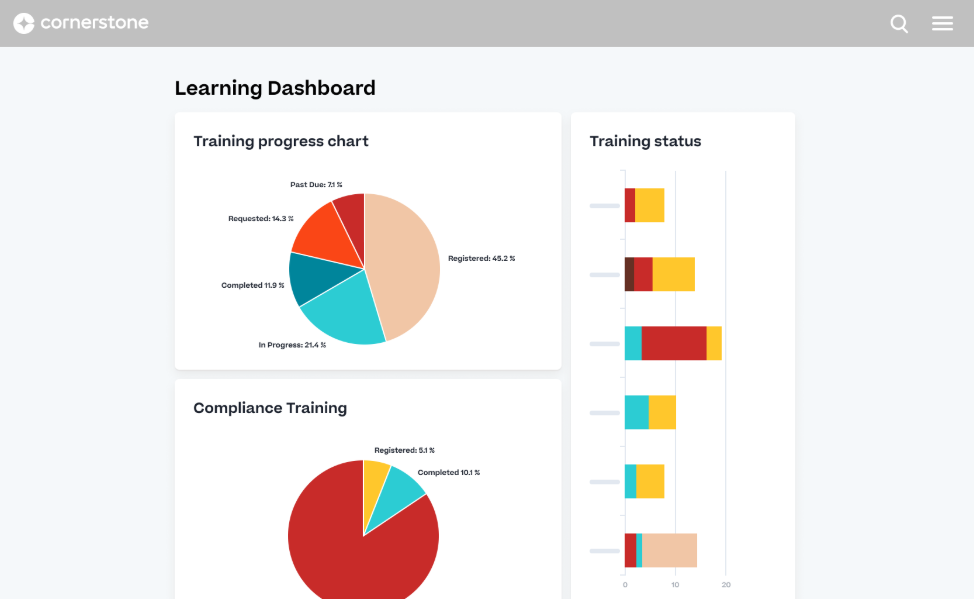
Cornerstone is one of the biggest names in enterprise learning, used by around 7,000 organisations in 186 countries. Its suite covers learning, performance, recruiting and succession, assembled through acquisitions over many years.

In May 2026 it launched Cornerstone Workforce AI, which combines workforce and labour-market data to target learning. The breadth suits HR-led global programmes, though reviewers often find the platform heavy to run. 

‍

Key Features

  • Workforce AI: Combines workforce and labour-market data to target learning and surface hidden talent
  • People Graph: Pulls signals from HRIS, ATS, CRM and project tools to build skill profiles
  • Readiness Agents: Runs agentic AI for workforce tasks, with links into Slack, Teams and Copilot
  • Personalised recommendations: The platform learns what each person knows, what they're working on, and where they're heading 

‍

Pricing

Cornerstone doesn't publish pricing. 

‍

Rating

G2: 4.1/5 

‍

‍

7. Degreed

‍

Degreed is a learning and skills platform with 10 million activated users in 160+ countries. It brings content from thousands of providers into one experience, with customers including HSBC and Ericsson.

Its AI coach, Maestro, works in text and voice and runs role-plays with structured feedback. Capgemini used Degreed to train 150,000 employees in 10 weeks. We've also written about Degreed alternatives.

‍

Key Features

  • Maestro: Coaches people by text or voice, runs role-plays and curates pathways
  • Skill Review: Assesses proficiency through adaptive, behaviour-based questions developed with psychometricians
  • Degreed Academies: Runs cohort-based programmes for longer, structured development
  • Maestro Studio: L&D teams build and launch custom AI coaches, roleplays, quizzes, surveys and forms in minutes 

‍

Pricing

Degreed doesn't publish prices.

‍

Rating

G2: 4.3/5 

‍

‍

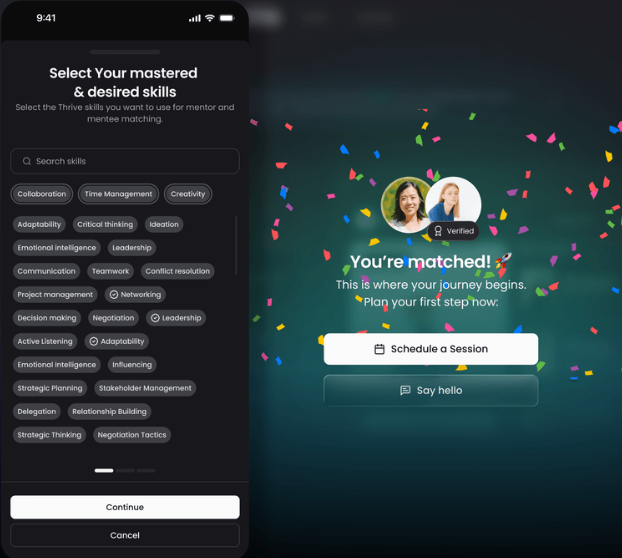
8. Thrive Learning

‍

Thrive is a UK-built L&D platform used by 500+ organisations and 5 million people in 60+ countries. It combines learning, mentoring, communities and internal comms, with customers including Volvo and British Airways.

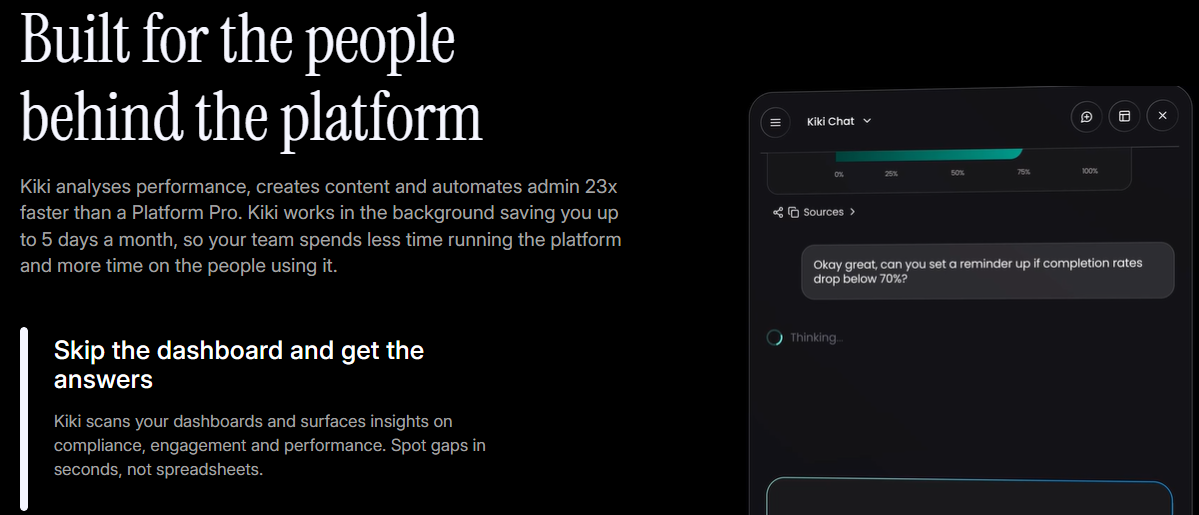
Its AI agent, Kiki, comes included at no extra cost and covers coaching, content creation, analytics and admin. Mentoring is built in too, which saves buying a separate tool. Our Thrive alternatives guide goes further.

‍

Key Features

  • Kiki AI agent: Works in five modes, Coach, Creator, Analyst, Admin and Assistant, at no extra cost
  • Mentoring: Matches mentors and mentees, sets goals and tracks impact
  • Skills and pathways: Maps skills to roles, finds gaps and builds pathways to close them

‍

Pricing

Thrive publishes pricing through an online calculator, with no form or sales call needed. Larger tiers still go through a demo.

‍

Rating

G2: 4.5/5 

‍

‍

9. Skillsoft Percipio

‍

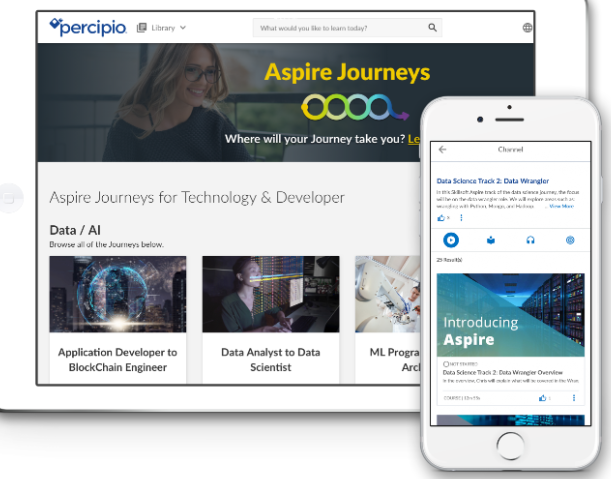
Skillsoft Percipio is an AI-driven skills platform backed by one of the largest content libraries in corporate learning, with 325,000+ learning assets. Skillsoft says 60% of the Fortune 1000 use it.

Its AI role-play tool, CAISY, lets people rehearse difficult conversations and get scored feedback in Practice mode. Percipio suits organisations that value library breadth over bespoke, skills-mapped learning.

‍

Key Features

  • CAISY: Lets people rehearse conversations with AI in Practice, Role Model and Guiding modes
  • AI Coach: Turns development needs into coaching goals, aligned to ICF standards
  • Skill Benchmarks: Assesses skills to show gaps across teams
  • AI content creation: L&D teams build custom courses, simulations and assessments in minutes, then update them as priorities shift 

‍

Pricing

Skillsoft's self-serve figures sit on its pricing page.

  • Individual: $25 per month, or $269 per year, with a 45-day free trial
  • Teams: $20 per seat per month billed annually, up to 300 seats, with a 30-day free trial
  • Enterprise: custom pricing above 300 seats

‍

Rating

G2: 4.1/5 

‍

‍

10. LinkedIn Learning

‍

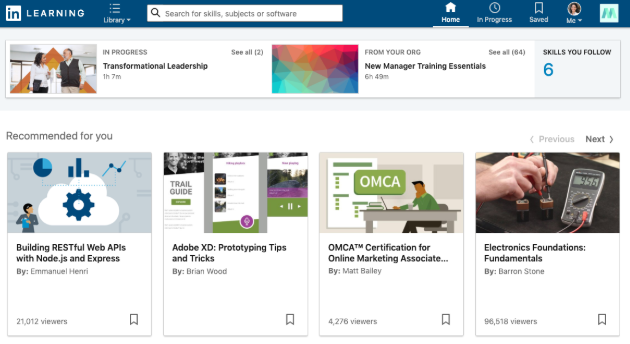
LinkedIn Learning offers 24,000+ expert-led courses, backed by skills insights from LinkedIn's network of more than 1 billion members. Customers include LEGO and Siemens.

Its AI coach answers questions from LinkedIn Learning courses and links to the source course, so people can check what they're told. Many teams run it inside another platform, for example through HowNow’s LinkedIn Learning integration.

‍

Key Features

  • AI-powered coaching: Answers questions using LinkedIn Learning courses, with a link to the source course
  • AI role play: Lets people practise workplace conversations by voice or text, on Enterprise and Premium plans
  • Skills insights: Draws on LinkedIn's member data to show trending and in-demand skills
  • AI-assisted content curation: AI-powered search helps admins and learners find the right content quickly, instead of browsing thousands of courses 

‍

Pricing

  • Teams: $379.88 per licence per year, for 2 to 20 licences, with a one-month free trial
  • Enterprise and Career Hub: no published price, contact sales

‍

Rating

G2: 4.4/5 

‍

‍

Looking for the top AI enterprise learning software?

Your three-year LMS contract is up for renewal, and the engagement numbers are hard to defend. Every vendor on your shortlist says it has AI. For some, that means a coach that knows your business. For others, it means a button that writes quiz questions.

Most buying mistakes happen in the gap between those two. So we compared 10 platforms on what the AI actually does, how each handles skills, cost, and G2 reviews.

‍

Why listen to us?

We build HowNow for L&D teams who have outgrown a traditional LMS. We see which AI features change how people learn, and which only shine in a demo.

Hotelplan mapped 300+ job roles to skills in one month, reached 99% activation and saw 78% of employees feel confident in their role skills. Infinity Works hit 97% activation within four months. 

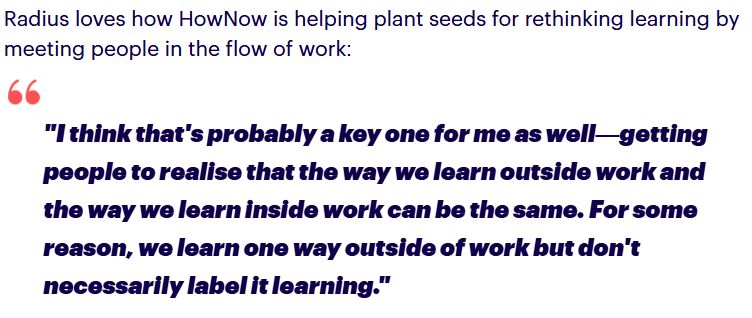
Trainline halved the time its people spend on compliance training, and Operatix ramped new starters 33% faster. Radius upskilled 3,000 managers, and FitFlop took positive sentiment on access to L&D from 0 to 69%.
So we judge AI platforms the way our customers do: does the AI get people to the right learning faster, and can L&D prove it? See more on our customer stories page.

‍

‍

What is AI enterprise learning software?

AI enterprise learning software is a corporate learning platform that uses AI to personalise, deliver and measure employee development. It maps learning to each person's role and skills, recommends next steps and coaches people as they work.

‍

‍

Why is AI enterprise learning software important?

‍

  • People actually engage: Generic catalogues get ignored. When learning maps to role-specific skills, people open it because it helps with this week's work.
  • L&D spends less time on admin: Manual assignment, completion chasing and hand-built reports eat hours every week. AI handles recommendations, nudges and dashboards instead.
  • Skills become visible: Most organisations can't say what their workforce can do today. Skills-aware AI builds that picture, which is why skills-first learning is becoming the default.
  • Compliance is easier to prove: Automated assignment, tracking and renewals keep audit evidence in one place, so nobody stitches spreadsheets at midnight.
  • Learning connects to business results: Leaders want proof that training moved performance. Joined-up learning, skills and performance data provides it.

‍

‍

Selection criteria: how we evaluated

Every vendor now calls itself AI-powered, so we looked past the labels. We scored each platform on five criteria.

  • AI depth: We checked whether AI runs through the whole platform or sits in one corner, and what data feeds it. AI trained on real work signals beats a chatbot added to a course catalogue.
  • Skills approach: Looked at how each platform builds its picture of employee skills. Skills read from real work stay current, while self-reported forms go stale the week they're filled in.
  • Content: We weighed the size, quality and skills-mapping of both internal and off-the-shelf content. A huge library means little if people can't find what closes their gaps.
  • AI governance: Asked where your data goes, whether AI answers are grounded in approved content, and how much control admins have. This matters most for regulated teams.
  • Pricing and proof: We rated how open each vendor is about pricing, read what G2 reviewers say, and looked for named customers showing real results.

No platform wins on every criterion. The right choice depends on which of these matters most to your team today.

‍

‍

How to choose

Start with the problem, not the feature list. If you're a mid-to-large enterprise that wants learning, skills, coaching, and content in one AI-native platform, HowNow is built for that. If you train customers and partners at real scale, Docebo or Absorb are worth a look.

If expert-led content matters most, 360Learning has a transparent entry price. Frontline-heavy organisations should shortlist Disprz, while global enterprises wanting recruiting and succession in one suite will lean towards Cornerstone. Skillsoft Percipio and LinkedIn Learning suit teams that mainly need library breadth.

Whatever you choose, ask each vendor to show the AI working on your own content. 

‍

‍

Choose AI that changes how your people learn

Every platform here uses AI in some form. The real question is whether it knows your people's skills, works from your content and proves results.

HowNow was built for exactly that. Hotelplan hit 99% activation, Trainline halved compliance training time, and TomTom reached 100% onboarding completion. Each came from one platform joining learning, skills, coaching, and reporting.

Ready to see it working on your own content? Book a demo and see HowNow in action.

‍

‍

FAQs

What's the difference between AI enterprise learning software and a traditional LMS?

A traditional LMS hosts courses and tracks completions. AI enterprise learning software personalises learning to each person's role and skills, recommends what to do next and coaches people in the flow of work. 

‍

How do I know if an AI learning platform is trustworthy?

Check whether the AI grounds its answers in your approved content and whether your data stays within your tenant. Ask who controls what the AI can see. Then test it live on your own documents during the demo.

‍

How much does AI enterprise learning software cost?

It varies widely. 360Learning's Team plan starts at $8 per user per month, and Disprz Essentials at $2 per learner per month. HowNow, Docebo, Absorb, Cornerstone and Degreed quote pricing based on your size and needs.

‍

Can AI enterprise learning software handle compliance training?

Yes. The strongest platforms automate assignment by role, track renewals and keep audit trails in one place. With HowNow's compliance training tools, you can assign, track and prove completion without rebuilding spreadsheets before every audit.

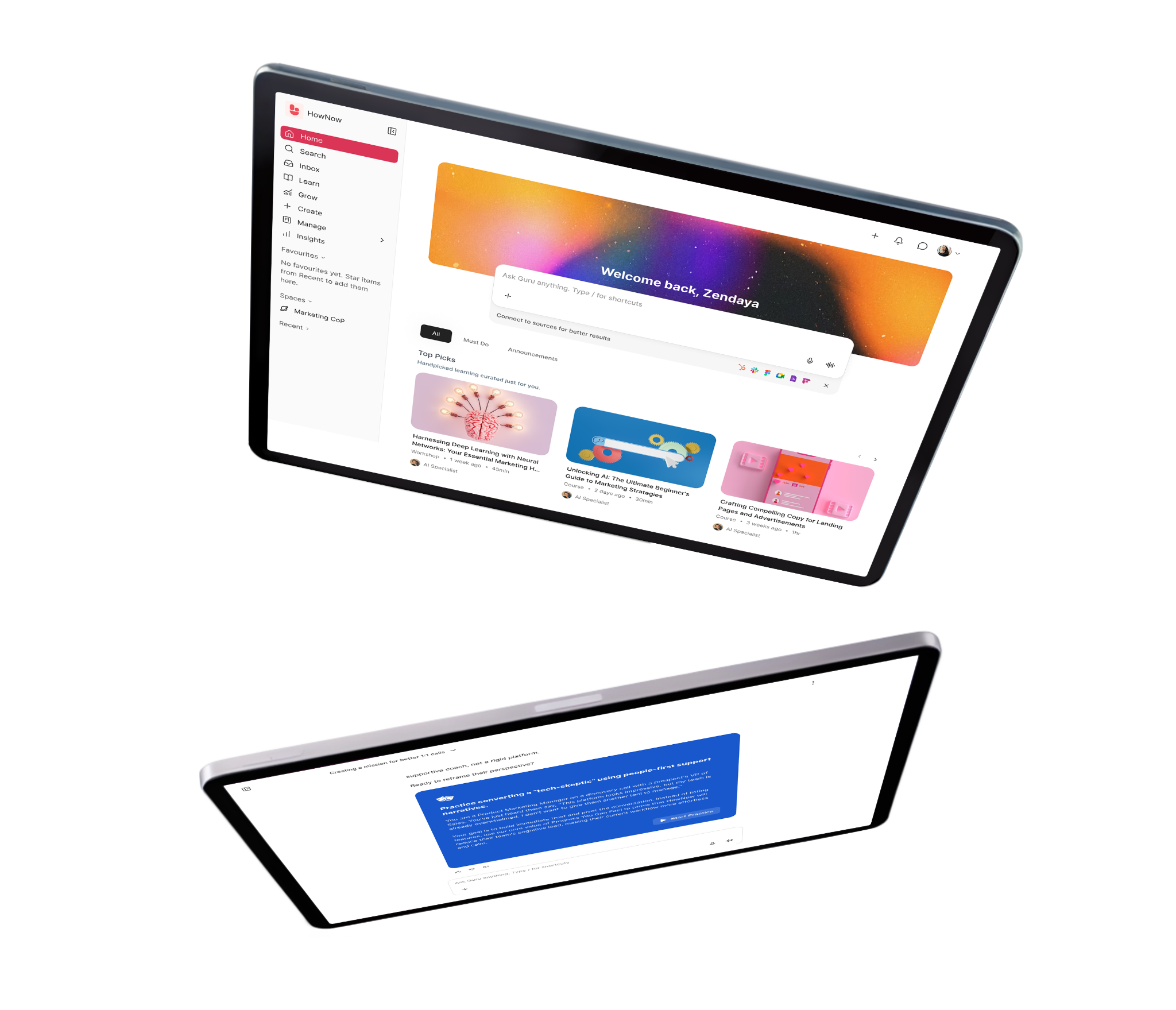
10 Top AI Enterprise Learning Software Platforms Compared For 2026

Blog
Oct 14
.
5 min read

Quick summary

The best learning experience platform is the one your people actually open, because it shows them learning that fits their role. HowNow leads this list for mid-to-large organisations that want LMS, LXP, skills and content in one AI-native platform, with skills read from real work. 360Learning is the pick if you want subject-matter experts building your courses. Degreed suits large enterprises with a mature skills strategy and the budget to match.

‍

‍

The 10 best learning experience platforms

No. Platform Best for Pricing G2 rating
1 HowNow Mid-to-large enterprises wanting learning tied to real skills Demo-led, ROI calculator on pricing page 4.5/5
2 360Learning SME-led, collaborative course creation From $8/user/month 4.6/5
3 Degreed Enterprise skills strategy and assessment Custom quoted 4.3/5
4 Docebo Large, multi-audience enterprise training Custom quoted 4.3/5
5 Cornerstone OnDemand Global enterprises wanting learning and talent in one suite Custom quoted 4.1/5
6 Thrive Learning UK organisations wanting built-in AI, mentoring and communities $34,000 for 100 learners 4.5/5
7 Absorb LMS Structured training with AI grounded in your own content Custom quoted 4.6/5
8 LearnUpon Training employees, customers and partners from one login Quoted, from 100 users 4.5/5
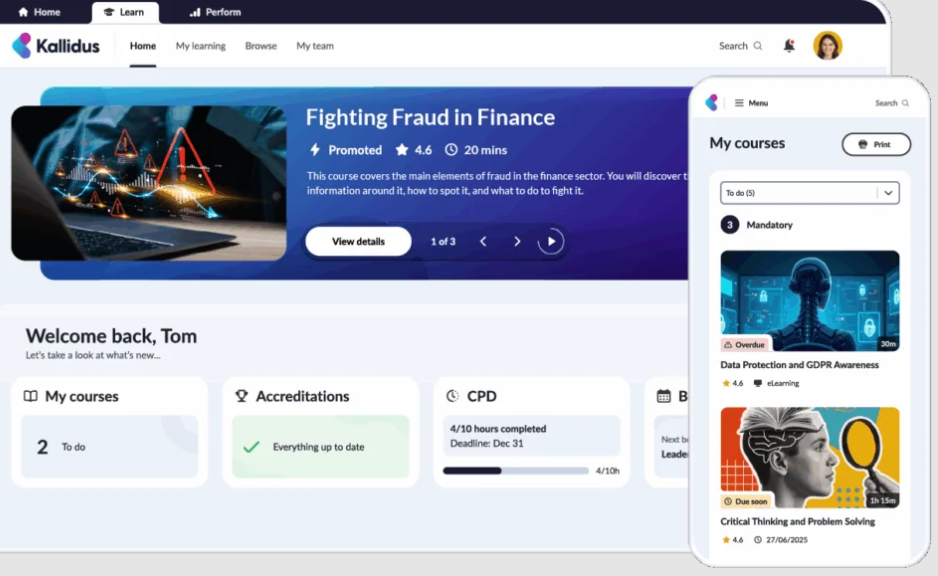
9 Kallidus UK organisations with heavy compliance needs Custom quoted 4.4/5
10 TalentLMS Small teams that want to launch quickly Free plan, paid from $119/month 4.6/5

‍

1. HowNow

‍

HowNow is an AI-native learning platform that brings courses, coaching, communities and career paths into one place. We built it for organisations of 250 to 5,000 people that have outgrown a traditional LMS.

The difference starts with skills. Our skills graph reads skills from real work, not from a form nobody fills in, so content stays relevant as roles change. Guru, our AI coach, runs through the whole platform, answering questions, running role-plays and building dashboards when you ask.

HowNow Plus adds a curated, skills-mapped content library that your people and your AI tools can both draw on. And because onboarding, compliance, leadership development and careers all run on one platform, your reporting stays joined up.

‍

Key Features

  • AI pathway builder: Personalised learning paths built from skills gaps, role context, and business goals. Automatically.
  • Adaptive learning: Every learner gets a personalised path based on their role, skills, and progress. 1:1 learning at scale.
  • AI curation: The right content found, tagged, and organised from your internal sources and external libraries. Surfaced automatically.
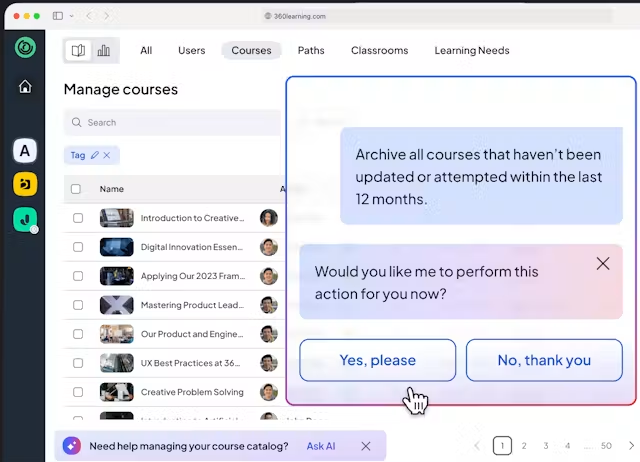
  • Learning communities: Peer expertise made visible, structured, and searchable. Your best knowledge captured and available to everyone.
  • Skills graph: Every skill and every gap visible. The intelligence that connects performance gaps to the learning that will close them.
  • Career paths: Every employee sees their skills, their gaps, and where they can grow. Real paths that drive engagement without mandating it.
  • AI Performance coaching: Answers, practice, feedback, and proactive coaching, delivered where your people already work. Connected to real work signals.
  • Trusted content: Expert knowledge your AI can actually use. Every recommendation grounded in real expertise, not generic results.
  • Unified Search: Pulls any course, document or expert answer from one search box across your tools.
  • In-flow delivery: Serves learning inside Slack, Teams and the browser, where people already work.

‍

Pricing

  • Essentials - £60/user/year, Centralised learning with built-in compliance
  • Pro - £80/user/year, Personalised learning for every role, powered by AI, with zero admin
  • Plus - +£45/user/year, Curated learning from top providers, ready to use, skills-mapped, included in one subscription 

‍

Rating

G2: 4.5/5.

‍

‍

2. 360Learning

‍

360Learning is a collaborative learning platform built on one idea: the people who know the subject should create the training. Its AI Content Builder helps subject-matter experts turn what they know into courses, while L&D keeps final approval.

More than 2,500 customers use it, including Cisco, Duolingo and Michelin. If you're weighing it up, our guide to 360Learning alternatives compares it with the wider market.

‍

Key Features

  • AI Content Builder: Helps subject-matter experts build courses quickly, with L&D oversight before anything goes live
  • Learning Needs: Lets employees request training topics and upvote each other's requests, so content follows real demand
  • Skills library: Starts you with 20,000 standard skills, plus a free SkillsGPT to help shape your own framework
  • Academies: Runs dedicated learning spaces for different teams and communities

‍

Pricing

Team: $8 per user per month. Business and Enterprise plans are custom-quoted.

‍

Rating

G2: 4.6/5.

‍

‍

3. Degreed

‍

Degreed is one of the original learning experience platforms, built for large enterprises that want to connect learning to a skills strategy. It pulls content from internal and external sources into one searchable home.

The company reports 10 million activated users across 160+ countries, and Capgemini used it to train 150,000 employees in ten weeks. 

‍

Key Features

  • Skill Review: Assesses skill levels through an adaptive questionnaire of behavioural questions, developed with psychometricians
  • Four rating sources: Combines Skill Review, manager, peer and self-ratings into one skill profile
  • Maestro: Coaches people by text and voice, with AI role-plays scored against custom rubrics
  • Academies: Builds structured programmes for specific teams or capabilities

‍

Pricing

Degreed doesn't publish prices. 

‍

Rating

G2: 4.3/5.

‍

‍

4. Docebo

‍

Docebo is an enterprise learning platform that now describes itself as an AI workforce readiness platform. It suits large organisations training employees, customers and partners from one system.

More than 3,900 customers use it, with over 30 million users across 70+ countries. 

‍

Key Features

  • AI assistant: Helps learners find answers and helps admins create course content faster
  • Content Marketplace: Gives access to over 30,000 courses and professional certifications
  • MCP server: Lets admins run Docebo tasks from Claude, ChatGPT, Copilot and Gemini, generally available since July 2026
  • Extended enterprise: Runs separate, branded learning for customers and partners alongside employee training

‍

Pricing

Docebo's pricing page lists two tiers, Elevate and Enterprise, both quoted by sales. 

‍

Rating

G2: 4.3/5.

‍

‍

5. Cornerstone OnDemand

‍

Cornerstone is a legacy giant in enterprise learning and talent, and it relaunched its platform as Cornerstone Workforce AI in May 2026. Its learning experience platform, formerly EdCast, is one part of a much wider talent suite.

About 7,000 organisations use Cornerstone across 180+ countries. The suite has grown through acquisitions, including Saba, SumTotal, EdCast and SkyHive, which brings breadth but also complexity. 

‍

Key Features

  • Skills Engine: Draws on a taxonomy of 55,000+ skills, powered by labour-market data from SkyHive
  • Content Subscriptions: Offers Silver, Gold and , Gold and Platinum in 10+ languages
  • Readiness agents: Uses AI agents to map roles, skills and future workforce needs
  • Compliance management: Tracks certifications and audit evidence across global teams

‍

Pricing

Cornerstone doesn't publish pricing.

‍

Rating

G2: 4.1/5.

‍

‍

6. Thrive Learning

‍

Thrive is a UK-built platform that brings learning, communities, mentoring and internal knowledge together. It now positions itself as an AI-powered LMS, but its social feed and mentoring give it a strong LXP feel.

More than 500 organisations use Thrive across 60+ countries, including Specsavers, Volvo and British Airways. 

‍

Key Features

  • Kiki AI: Works in five modes, including Coach, Analyst and Content Creator, at no extra cost
  • Skill pathways: Maps skills to roles and builds pathways that close each person's gaps
  • Mentoring: Matches mentors and mentees, included at no extra cost
  • Content library: Includes 1,000+ ready-made resources, with 2,500+ more in the separate Thrive Content product

‍

Pricing

Price starts at $34000 per 1-100 learners, $48263 from 501-600 learners onwards

‍

Rating

G2: 4.5/5.

‍

‍

7. Absorb LMS

‍

Absorb is an LMS with strong LXP features, used by 3,500+ organisations including Sony, Samsung and Toyota. In May 2026 it launched Aura, a set of AI agents grounded in each customer's own approved content.

Forrester named Absorb a Leader in its Q4 2025 Wave for learning management systems and experience platforms. 

‍

Key Features

  • Absorb Aura: Runs AI agents for learners, course creation and admin tasks, grounded in your own content
  • Absorb Skills: Maps learning to 200+ competencies and 12,000+ skills
  • Absorb Amplify: Adds a library of 20,000+ pre-built courses
  • Absorb Infuse: Embeds learning inside the other tools your people use

‍

Pricing

Absorb doesn't publish pricing. Its pricing form asks for your learner count.

‍

Rating

G2: 4.6/5.

‍

‍

8. LearnUpon

‍

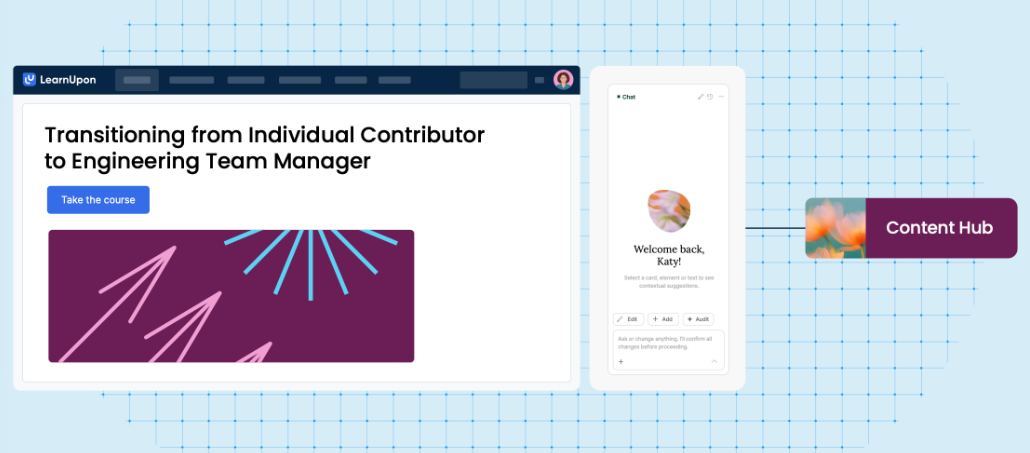
LearnUpon relaunched in July 2026 as an agentic learning platform. Its biggest strength is running separate, branded portals for employees, customers and partners from one admin login.

More than 1,700 organisations use it, and its support team is available around the clock. It's a strong pick when external training matters as much as internal learning.

‍

Key Features

  • Portals: Creates unique, branded learning environments for each audience from one place
  • LearnUpon IQ: Acts as an AI coordinator that connects every part of the platform
  • Create+: Builds courses with AI, which LearnUpon says is up to 90% faster
  • Learning Journeys: Sequences courses with prerequisites, timed release and certifications

‍

Pricing

LearnUpon doesn't publish prices. 

‍

Rating

G2: 4.5/5.

‍

‍

9. Kallidus

‍

Kallidus is a UK-based learning and performance provider with more than 1,000 customers and 2 million users. Its Learn LMS is built for compliance-heavy organisations, with AI recommendations and skills tools in the higher tiers.

It's more LMS than pure LXP, but it earns a place here for UK teams that need strong compliance alongside a modern learner experience.

‍

Key Features

  • Learn LMS: Manages courses, compliance and instructor-led training in one system
  • Power BI reporting: Embeds Power BI natively for detailed reporting
  • Off-the-shelf content: Includes 250+ ready-made courses
  • Kallidus Intelligence: Adds AI to help L&D teams focus on impact rather than activity

‍

Pricing

Kallidus doesn't publish prices.

‍

Rating

G2: 4.4/5.

‍

‍

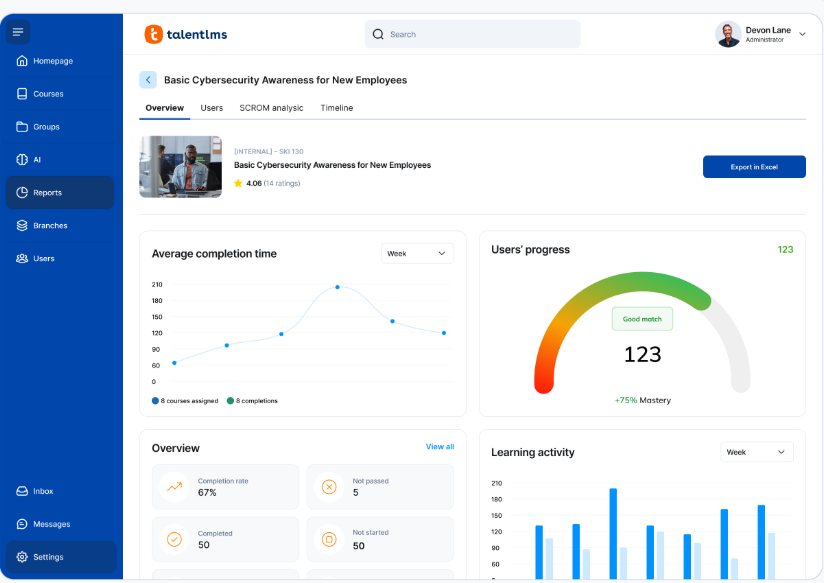
10. TalentLMS

‍

TalentLMS is a cloud LMS for small and mid-sized teams that want training live quickly. More than 70,000 teams use it.

It's one of the few platforms here with a free plan and fully published pricing. If budget is tight, it's an easy place to start.

‍

Key Features

  • TalentCraft: Generates courses with AI, with credits that vary by plan
  • Gamification: Adds points, badges and leaderboards on every plan
  • Learning Playground: Gives your team a space to practise and build confidence
  • TalentLibrary: Offers 1,000+ ready-made courses as a paid add-on

‍

Pricing

  • Free for up to 5 users
  • Core: $119/month (up to 40 users)
  • Grow: $229/month (up to 70)
  • Pro: $449/month (up to 100)

‍

Rating

G2: 4.6/5.

‍

‍

Why teams are looking for a new learning experience platform

Your three-year LMS contract is up for renewal. The engagement survey put development in the bottom three. And logins still only spike in compliance week.

If any of that sounds familiar, you're probably not short of content. You're short of a platform that knows your people well enough to show them what matters.

A learning experience platform is built to solve exactly this. It personalises learning around each person's role and skills, and it reaches them in the tools they already use. We compared 10 LXPs on skills, AI, pricing and verified G2 ratings, so you can build your shortlist faster.

‍

Why listen to us?

We build HowNow, an AI-native learning platform, and we spend every day helping L&D teams at 250 to 5,000-person companies fix engagement. We've seen what gets people logging in, and what only looks good in a demo.

The proof comes from our customers. TomTom reached 90% learner activation and 100% onboarding completion after launching its TomTom Academy on HowNow. Hotelplan mapped more than 300 job roles to skills in a single month, and 78% of its people now feel confident in their role skills.

Trainline cut compliance training time by 50% with in-house content. Infinity Works passed 97% activation within four months. At AND Digital, 75% of employees use HowNow every working day.

We also know this market because we compete in it every week. We've written breakdowns of 360Learning alternatives and Docebo vs Cornerstone, and we've used the same lens here. 

‍

‍

What is a learning experience platform?

A learning experience platform (LXP) is software that personalises learning for each employee. It pulls courses, internal knowledge and third-party content into one place, then recommends what fits each person's role, skills and goals.

A traditional learning management system (LMS) works the other way round. L&D assigns courses, tracks completions and reports on compliance. It's built for administrators first.

Today the line between the two is blurry. Most leading platforms now combine LMS control with LXP personalisation, so the better question is how well a platform understands your people. Our LXP vs LMS guide goes deeper on the difference.

Aspect LMS LXP
Built for Administrators Learners
Content Courses assigned by L&D Courses, internal knowledge and third-party content
Personalisation The same training for everyone in a group Recommendations by role, skills and goals
Success measure Completions Skills built and ongoing engagement

‍

Why a learning experience platform matters

  • People come back: Generic content gets ignored. When learning maps to each person's role and skill gaps, what shows up in their feed is worth opening.
  • You can see your skills: Instead of guessing what your workforce can do, you get a live view of where skills are strong and where the gaps are.
  • Admin shrinks: Automated pathways, smart recommendations and built-in reporting let a small L&D team run learning for thousands of people.
  • Compliance stops being a chase: You can assign, track and prove compliance training in one place, without stitching audit trails together from spreadsheets.
  • Impact becomes provable: When learning, skills and performance data live together, you can show the board what changed, not just what got completed.

‍

‍

How to choose the right learning experience platform

Start with the problem you're trying to fix. If people aren't engaging, you need personalisation built on real skills data, and HowNow is built for that. If your experts hold knowledge that never gets written down, 360Learning's collaborative model fits.

For large enterprises with mature skills programmes, Degreed and Cornerstone cover the most ground. Docebo, Absorb and LearnUpon suit teams that train customers and partners alongside employees.

If you're a UK organisation focused on compliance, Kallidus and Thrive know that market well. And for small teams on a budget, TalentLMS is the quickest way to get started.

Whichever platforms make your shortlist, ask each vendor the same question: how does your platform know what skills my people have? The answer tells you how good every recommendation will be.

‍

‍

Find the learning experience platform your people will actually use

Most learning experience platforms promise personalisation. Far fewer can explain where their skills data comes from, or prove that people keep coming back after launch.

HowNow reads skills from real work and puts AI coaching into the tools your people already use. It also gives you one view of learning, skills and performance. TomTom, Hotelplan and Trainline chose it for those reasons, and their results show their people keep using it.

If you're heading into a renewal or rethinking your learning stack, book a demo and see HowNow in action.

‍

‍

FAQs

What is the difference between an LMS and an LXP?

An LMS is built for administrators to assign courses, track completions and report on compliance. An LXP is built for learners, recommending content based on each person's role, skills and goals. Most modern platforms, including HowNow, now combine both.

‍

What is the best learning experience platform?

It depends on your size and goals. HowNow is the strongest pick for organisations of 250 to 5,000 people that want skills-based personalisation and AI coaching in one platform. 360Learning suits SME-led content creation, and Degreed suits large enterprise skills programmes.

‍

How much does a learning experience platform cost?

HowNow quotes per organisation after a demo, based on your headcount and needs. Degreed, Docebo and Cornerstone also price by quote, 360Learning starts at $8 per user per month, and TalentLMS has a free plan. 

‍

Can an LXP replace an LMS?

Yes, if it includes LMS essentials like course assignment, compliance tracking and reporting. Platforms like HowNow combine LXP personalisation with those admin tools, so you can run onboarding, compliance and upskilling in one place instead of two.

‍

What features should a learning experience platform have?

Look for skills mapping, personalised pathways, AI search and coaching, content curation, social learning and integrations with Slack, Teams and your HRIS. Most importantly, check how the platform builds its skills data.

The 10 Best Learning Experience Platforms For 2026

Blog
October 2, 2026
.
5 min read

Quick summary

Most online training software for employees promises personalisation and delivers a catalogue nobody opens. We compared 10 platforms on AI depth, skills relevance, engagement, reporting, pricing and G2 ratings. Below you'll find a quick comparison, honest reviews with pros and cons, and a simple way to choose. HowNow comes out on top for skills-based, personalised learning that people actually come back to.

‍

‍

Quick summary

Most online training software for employees promises personalisation and delivers a catalogue nobody opens. We compared 10 platforms on AI depth, skills relevance, engagement, reporting, pricing and G2 ratings. Below you'll find a quick comparison, honest reviews with pros and cons, and a simple way to choose. HowNow comes out on top for skills-based, personalised learning that people actually come back to.

‍

‍

10 best online training software for employees

Platform Best for Starting price G2 rating
HowNow Mid-to-large enterprises with knowledge workers and high-skilled teams Begins at £60/user/year 4.5/5
360Learning Collaborative course creation by subject-matter experts $8/user/month (Team plan) 4.6/5
Docebo Training employees, customers and partners in one platform Custom (demo-led, typically 250+ learners) 4.3/5
LearnUpon Training employees and external audiences with strong support Custom (employee plans from 100 users) 4.5/5
TalentLMS Small teams that want to start free Free; paid from $119/month (billed yearly) 4.6/5
iSpring LMS Paying only for active learners $6.91/active user/month (100 users) 4.6/5
Absorb Compliance and partner training with strong reporting Custom 4.6/5
Thrive Social, engaging learning with published pricing $34,000 for 100 learners 4.5/5
Kallidus UK organisations with heavy compliance needs Custom 4.4/5
Cornerstone OnDemand Global enterprises wanting a full talent suite Custom 4.1/5

‍

1. HowNow

HowNow is an AI-native learning platform that brings learning, coaching, communities and careers into one place. It works out what each person needs to learn, then builds a path around those gaps.

Most training platforms start with content and hope people find what's relevant. Our AI Skill Graph reads real work activity and infers the skills people actually demonstrate. It draws on a skills framework covering more than 30,000 job roles, so you won't spend months building a taxonomy before launch.

Our AI coach, Guru, answers questions from your own content and runs role-play practice with instant feedback. And because the platform covers everything from onboarding and compliance to upskilling and leadership development, you're not stitching four tools together. L&D teams can also ask Guru about their data and turn the answer into a dashboard to share with leadership.

The results show up in activation, not just completion. When Infinity Works rolled out HowNow, 97% of their team was using it within four months. 

‍

Key Features

  • AI pathway builder: Personalised learning paths built from skills gaps, role context, and business goals. Automatically.
  • Adaptive learning: Every learner gets a personalised path based on their role, skills, and progress. 1:1 learning at scale.
  • AI curation: The right content found, tagged, and organised from your internal sources and external libraries. Surfaced automatically.
  • Learning communities: Peer expertise made visible, structured, and searchable. Your best knowledge captured and available to everyone.
  • Skills graph: Every skill and every gap visible. The intelligence that connects performance gaps to the learning that will close them.
  • Career paths: Every employee sees their skills, their gaps, and where they can grow. Real paths that drive engagement without mandating it.
  • AI Performance coaching: Answers, practice, feedback, and proactive coaching — delivered where your people already work. Connected to real work signals.
  • Trusted content: Expert knowledge your AI can actually use. Every recommendation grounded in real expertise, not generic results. 
  • Unified Search: Pulls any course, document or expert answer from one search box across your tools.
  • In-flow delivery: Serves learning inside Slack, Teams and the browser, where people already work.

‍

Pricing

  • Essentials - £60/user/year, Centralised learning with built-in compliance
  • Pro - £80/user/year, Personalised learning for every role, powered by AI, with zero admin
  • Plus - +£45/user/year, Curated learning from top providers, ready to use, skills-mapped, included in one subscription 

‍

Rating

G2: 4.5/5.

‍

‍

2. 360Learning

‍

360Learning is built around collaborative learning. Subject-matter experts write and update courses themselves, and L&D reviews and approves them before they go live.

Its AI Content Builder turns existing documents into structured courses and generates quizzes in more than 10 question formats. It suits companies that want to turn internal know-how into training quickly. Our 360Learning alternatives guide compares it with similar tools.

‍

Key features

  • Collaborative authoring: Experts co-author courses, with comments and L&D approval workflows
  • AI Content Builder: Turns documents or prompts into courses and quizzes
  • AI translation and grading: Translates courses and scores open-text answers automatically
  • 80+ integrations: It includes Workday, Slack, BambooHR, and HRIS tools.

‍

Pricing

The Team plan runs $8/user/month for up to 100 users. Business and Enterprise plans are custom-quoted.

‍

Rating

G2: 4.6/5.

‍

‍

3. Docebo

‍

Docebo is an enterprise learning platform that trains employees, customers and partners from one system. Its extended enterprise setup gives each audience a separately branded portal with its own admin rights.

Docebo's AI turns prompts, PDFs, and documents into structured courses with knowledge checks, and tags content automatically. You can also add third-party libraries such as Go1 and OpenSesame. It's powerful, but reviewers regularly mention a steep setup curve. Our Docebo alternatives guide covers lighter options.

‍

Key features

  • AI course creation: Builds courses from prompts and documents, with translation into 46 languages
  • Content marketplace: Access to third-party libraries including Go1 and OpenSesame
  • Extended enterprise: Separately branded portals for customers, partners, and resellers
  • Skills Intelligence: It infers employee skills from roles and projects.

‍

Pricing

Docebo doesn't publish prices. 

‍

Rating

G2: 4.3/5.

‍

‍

4. LearnUpon

‍

LearnUpon is a cloud LMS that trains employees, customers and association members from one account. More than 1,700 organisations use it, and its Portals feature gives each audience its own branded learning space.

It now calls itself an agentic learning platform. AI agents help build and update content, surface capability gaps and take routine admin off your plate. Every plan includes an implementation consultant and 24/7 support. Our LearnUpon alternatives guide compares it with similar tools.

‍

Key features

  • Learning Journeys: Role-based training paths that personalise learning at scale
  • Create+: AI course authoring that builds modules up to 90% faster
  • Portals: Separate branded learning spaces for employees, customers and partners
  • LearnUpon IQ: AI agents that automate content updates and flag skills gaps

‍

Pricing

LearnUpon doesn't publish prices. Employee training plans start at 100 users.

‍

Rating

G2: 4.5/5.

‍

‍

5. TalentLMS

‍

TalentLMS is a cloud LMS known for being quick to set up and simple to use. It's a popular choice for small and mid-sized businesses running onboarding, compliance or partner training.

Its TalentCraft AI generates course pages, quizzes and flashcards from a prompt, and translates content into 15 languages. The free plan lets you test it properly before spending anything. The trade-off is depth, as reporting and customisation are lighter than enterprise tools.

‍

Key features

  • Free plan: Train up to 5 users across 10 courses at no cost
  • TalentCraft AI: Generates course content, quizzes and translations from prompts
  • Learning paths: Structured training sequences for guided progression
  • Certification tracking: Automates assignment, completion, and renewal reminders.

‍

Pricing

  • Free for up to 5 users
  • Core: $119/month (up to 40 users)
  • Grow: $229/month (up to 70)
  • Pro: $449/month (up to 100)

‍

Rating

G2: 4.6/5.

‍

‍

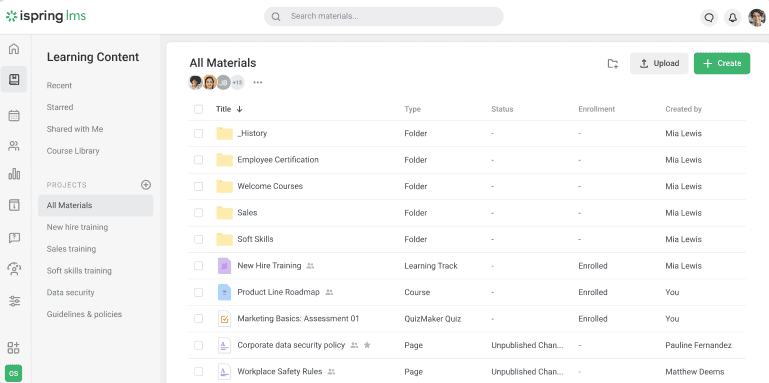
6. iSpring LMS

‍

iSpring LMS, formerly iSpring Learn, is a simple corporate LMS with pay-per-active-user pricing. You can register as many people as you like and only pay for those who log in during the month.

It pairs closely with iSpring Suite, a PowerPoint-based authoring tool, so teams can turn existing slides into interactive courses. The mobile app supports offline learning and syncs progress once people reconnect. This helps field and frontline teams with patchy signal.

‍

Key Features

  • Pay-per-active-user: Only pay for learners who actually log in
  • Offline mobile learning: Download courses and complete them without internet
  • iSpring Suite integration: Turn PowerPoint slides into interactive courses and simulations
  • Personalized learning tracks and development plans: Admins combine courses and assessments into chaptered tracks, with optional locked completion order. 

‍

Pricing

  • Business, 100 users: $6.91 per user/month, billed at $8,286 per year
  • Business, 300 users: $4.46 per user/month, billed at $16,050 per year
  • Business, 500 users: $3.97 per user/month, billed at $23,790 per year
  • Enterprise: Custom pricing through sales

‍

Rating

G2: 4.6/5.

‍

‍

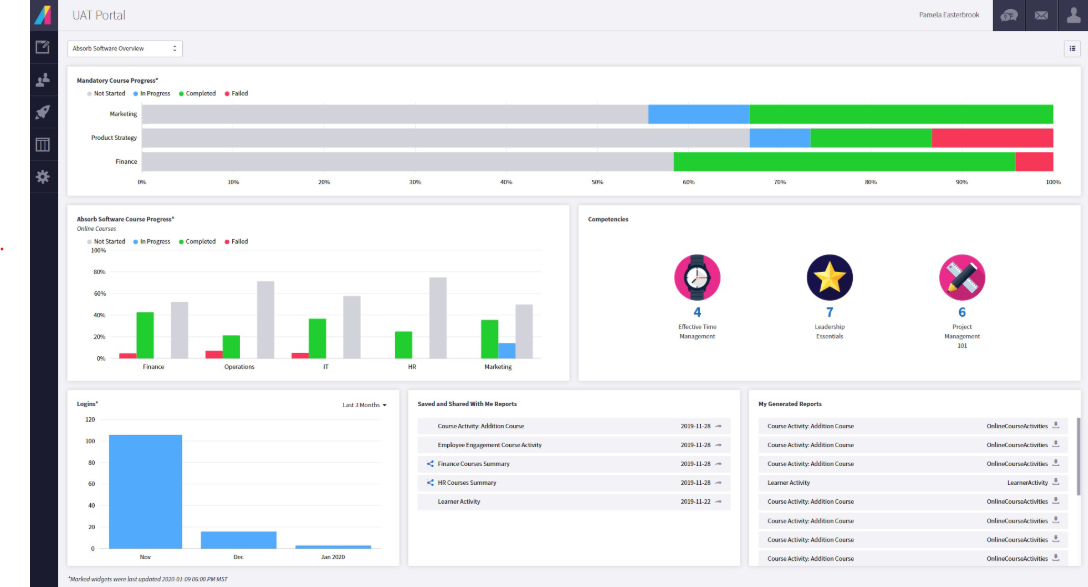
7. Absorb

‍

Absorb, formerly Absorb LMS, is a corporate learning platform used by more than 3,500 companies. It's strong on compliance, onboarding and training for customers and partners.

In 2026 it launched Absorb Aura, a set of AI agents. They help learners find answers, build courses from documents and take routine work off admins. Reporting is a real strength, with scheduled reports and an optional analytics add-on. 

‍

Key Features

  • Absorb Aura: AI agents for learner questions, course creation and admin support
  • Multi-portal branding: Separately branded portals for different audiences
  • Advanced reporting: Configurable, scheduled reports plus the Absorb Analyze add-on
  • Scalable architecture: Handles growing learner populations without performance drops

‍

Pricing

Absorb doesn't publish pricing. 

‍

Rating

G2: 4.6/5.

‍

‍

8. Thrive

‍

Thrive is a UK-based learning platform used by more than 500 organisations, including British Airways, Burger King and Specsavers. Its social, feed-style interface feels closer to a consumer app than a traditional LMS.

Its AI agent, Kiki, creates courses, quizzes and interactive modules from a prompt or an uploaded file. Mentoring with automatic matching comes as standard. 

‍

Key Features

  • Kiki AI agent: Creates courses, quizzes and interactive content from prompts or files
  • Mentoring: Built-in mentoring with automatic mentor and mentee matching
  • Off-the-shelf content: A 2,500+ resource library, plus six separate sector suites
  • Spaces: Provide community learning areas for collaboration and peer discussion.

‍

Pricing

Price starts at $34000 per 1-100 learners, $48263 from 501-600 learners onwards

‍

Rating

G2: 4.5/5.

‍

‍

9. Kallidus

‍

Kallidus is a UK learning and performance company whose Learn LMS is popular in regulated sectors. It suits organisations that need compliance training to stay audit-ready without much fuss.

Its AI layer, Kallidus Intelligence, generates skills frameworks, tags content with skills and helps people set objectives. Kallidus also sells performance management and 250+ off-the-shelf courses, so learning and performance can be managed together.

‍

Key features

  • Compliance tracking: Automated reminders, certifications and audit-ready records
  • Kallidus Intelligence: AI-generated skills frameworks and skills tagging for content
  • Performance management: Objectives and reviews connected to learning
  • Automated admin: Training is auto-assigned by group and category, with scheduled reminders and role-based permissions.

‍

Pricing

Kallidus doesn't publish prices. 

‍

Rating

G2: 4.4/5.

‍

‍

10. Cornerstone OnDemand

‍

Cornerstone OnDemand goes well past training. Learning, performance, succession, recruiting and skills all come in one suite, assembled largely through acquisitions such as Saba, EdCast and SumTotal.

In May 2026 it relaunched the platform as Cornerstone Workforce AI, with a skills engine and AI agents. It's sized for large, global organisations with dedicated admin teams. 

‍

Key Features

  • Full talent suite: Learning, performance, succession, recruiting and core HR
  • Skills engine: A skills library of 55,000+ skills, powered by its SkyHive acquisition
  • Global compliance: Compliance and certification management across multiple regions
  • Talent suite integration: Connects learning to performance, recruiting, and workforce planning

‍

Pricing

Cornerstone doesn't publish pricing.

‍

Rating

G2: 4.1/5.

‍

‍

Most training software promises personalisation but delivers a course catalogue

Most L&D teams know the pattern. You launch a new platform, logins spike in compliance week, and then everything goes quiet. According to LinkedIn's 2025 Workplace Learning Report, 88% of organisations worry about retention, and learning is their top retention strategy. 

So a platform nobody opens is a business problem, not just an awkward dashboard. Completion rates look fine, but ask a manager whether the training changed anything and you'll get a shrug. 

‍

Why listen to us?

We built HowNow because we kept seeing the same thing at organisation after organisation. They'd buy a learning platform, load it up, and watch engagement drop off. So we built a platform around skills instead of catalogues, and our customers' results show the difference.

TomTom reached 90% activation across 3,500 people and 100% onboarding completion. Orbus cut a two-day training process down to 2.5 hours. At AND Digital, 75% of employees use HowNow every working day.

We also talk to L&D leaders every week who are replacing a platform that didn't work out. So we know the questions worth asking.

‍

‍

What is online training software for employees?

Online training software lets you deliver learning content digitally, and at its simplest it's just a course library with a login. The more advanced platforms map training to skills, so each person sees content that's relevant to their role.

You'll see it sold under a few labels. A learning management system (LMS) focuses on assigning and tracking courses. A learning experience platform (LXP) focuses on discovery and personalisation. 

‍

‍

Why is online training software important?

Skills needs are changing faster than most organisations can keep up. In a 2025 Gartner survey, 48% of HR leaders said demand for new skills is evolving faster than their talent structures can support. Good training software helps you respond without doubling the size of your L&D team.

  • Onboarding is faster and more consistent. Every new starter gets the same baseline, wherever they join.
  • You can track compliance properly. Assign mandatory training, set deadlines, and pull an audit trail in seconds.
  • You can see where the skills gaps are. Good software shows you where the gaps are across your organisation, not just who finished a course.
  • You can train more people without growing your L&D team. The platform assigns courses, sends reminders, and pulls reports for you, so your L&D team doesn't have to do it manually.
  • Learning reaches people where they work. The best platforms deliver training inside Slack, Teams or the browser, so nobody has to remember another login.

‍

‍

Selection criteria: how we evaluated

We scored each platform on six things that matter most to L&D teams at organisations of 250 to 5,000 people.

  • AI depth: Does AI adapt learning to each person, or just recommend popular courses?
  • Skills relevance: Can the platform connect training to the skills each role needs?
  • Engagement: Will people use it, including inside the tools they already work in?
  • Admin and reporting: How much manual work does it remove, and can you prove impact?
  • Pricing transparency: Is pricing published, and how does it scale as you grow?
  • User ratings: We checked G2 ratings and common review themes in September 2026.

‍

How to choose

Start with the problem you most need to solve. If it's making training relevant to each person's role, HowNow and Sana Learn both personalise learning around skills rather than just delivering courses.

If you need to train employees, customers, and partners from one system, Docebo and Absorb both offer separately branded portals. Cornerstone makes sense if you want learning, performance and recruiting in one enterprise suite.

For smaller teams watching their budget, TalentLMS has a free plan and iSpring LMS only charges for people who log in. If compliance is the main driver, Kallidus keeps it simple.

Whatever you shortlist, run a trial with real employees, not just the L&D team. Features and pricing matter, but your team won't use a platform that doesn't feel relevant to them. 

If you want one that maps learning to skills from day one, book a HowNow demo and bring that manager who shrugged.

‍

‍

FAQs

How much does online training software cost?

Costs vary widely. Tools with published pricing, like iSpring, run roughly $4 to $7 per user per month, while most enterprise platforms use custom quotes. HowNow prices through a demo based on your team's size and needs.

‍

Do i need an LMS or an LXP?

An LMS is where you store and assign courses. An LXP puts learners in control and recommends content based on their role and skills. Most modern platforms, including HowNow and Sana Learn, now do both. 

‍

Can online training software replace in-person training?

It covers most needs, including onboarding, compliance, product knowledge and skills development. It's less effective for hands-on skills or sensitive conversations that need a facilitator in the room. So most organisations end up using a blended approach.

‍

How long does online training software take to implement?

It depends on the platform, your integrations and how much content you're moving. Simpler tools can be running within weeks, while enterprise suites often take months. Hotelplan mapped 300+ job roles on HowNow in one month.

‍

Can online training software integrate with our existing tools?

Most platforms connect with HRIS, single sign-on and communication tools. HowNow syncs with your HRIS to enrol people automatically and delivers learning in Slack, Teams and Chrome. 

We Reviewed The 10 Best Online Training Software For Employees

Blog
October 5, 2026
.
5 min read

Quick summary

IT skills have a short shelf life. The right LMS maps technical skills automatically, plugs into the tools your engineers already use, and makes compliance straightforward to prove. 

We compared 10 platforms on what matters most to IT companies: skills tracking, AI capabilities, integrations, compliance, and pricing transparency. HowNow came out on top for AI-driven skills mapping, followed by 360Learning, Docebo and others.

‍

10 best learning management systems for IT companies

No. Tool G2 Rating Best For Pricing
1 HowNow 4.5/5 AI-driven skills mapping and personalised learning Begins at £60/user/year
2 360Learning 4.6/5 Peer-led collaborative technical training From $8/user/mo
3 Docebo 4.3/5 Enterprise IT with large content needs Custom
4 LearnUpon 4.5/5 Multi-portal training for employees and customers Custom
5 Thrive 4.5/5 Engagement-driven learning with published pricing $34000 per 1-100 learners
6 Cornerstone 4.1/5 Large enterprise compliance and content Custom
7 TalentLMS 4.6/5 Small IT teams, fast and affordable From $119/mo
8 Absorb LMS 4.6/5 Scalable platform for growing teams Custom
9 Degreed 4.3/5 Enterprise-scale skills intelligence Custom
10 Litmos 4.3/5 Global teams, fast deployment Custom

‍

‍

1. HowNow

‍

HowNow is an AI-native learning platform that connects what your people learn to the skills they need. For IT companies, that matters because the skills your team needs change with every framework update, cloud migration, or security patch.

‍

The Skills Graph maps every employee to skills and proficiency levels using job-market data across 30,000+ job roles. You don't need to build a taxonomy from scratch or ask engineers to self-report. The AI handles the mapping, and managers refine it with Focus Skills and peer endorsements.

‍

Guru is HowNow's AI coaching agent. It teaches, quizzes, and runs scenario-based practice sessions, all grounded in your company's own knowledge. It cites its sources, so your technical team can verify every answer. In environments where accuracy matters, that's not optional.

‍

HowNow Plus adds 10,000+ curated learning resources mapped to skills. You get relevant technical content on day one without building a single course. Publishers include Packt, iHasco, and McKinsey.

‍

Hotelplan mapped 300+ job roles in one month and hit 99% activation within three months. Operatix reduced ramp time for new hires by 33%. And Infinity Works, a UK IT consultancy, hit 97% activation within four months.

‍

Key features

  • AI pathway builder: Personalised learning paths built from skills gaps, role context, and business goals. Automatically.
  • Adaptive learning: Every learner gets a personalised path based on their role, skills, and progress. 1:1 learning at scale.
  • AI curation: The right content found, tagged, and organised from your internal sources and external libraries. Surfaced automatically.
  • Learning communities: Peer expertise made visible, structured, and searchable. Your best knowledge captured and available to everyone.
  • Skills graph: Every skill and every gap visible. The intelligence that connects performance gaps to the learning that will close them.
  • Career paths: Every employee sees their skills, their gaps, and where they can grow. Real paths that drive engagement without mandating it.
  • AI Performance coaching: Answers, practice, feedback, and proactive coaching — delivered where your people already work. Connected to real work signals.
  • Trusted content: Expert knowledge your AI can actually use. Every recommendation grounded in real expertise, not generic results. 
  • Unified Search: Pulls any course, document or expert answer from one search box across your tools.
  • In-flow delivery: Serves learning inside Slack, Teams and the browser, where people already work.

‍

Pricing

  • Essentials - £60/user/year, Centralised learning with built-in compliance
  • Pro - £80/user/year, Personalised learning for every role, powered by AI, with zero admin
  • Plus - +£45/user/year, Curated learning from top providers, ready to use, skills-mapped, included in one subscription 

‍

G2 rating

4.5 out of 5.

‍

‍

2. 360Learning

‍

360Learning is a collaborative learning platform where your subject-matter experts create the training, with L&D overseeing quality. For IT companies, that model works well. Technical knowledge lives in your engineers' heads, and 360Learning gives them AI authoring tools to turn it into courses quickly.

‍

The platform supports 80+ integrations, including Workday, Slack, and BambooHR. The Team plan covers up to 100 users and comes with a 30-day free trial, which makes it easier to test with a small group first.

‍

Key features

  • AI Content Builder: Helps experts create courses quickly with L&D oversight and quality controls.
  • Collaborative authoring: Lets multiple contributors build and review courses together.
  • 80+ integrations: Connects to Workday, Slack, BambooHR, and other HRIS tools.
  • Compliance management: Automates assignments, tracks completions, and generates audit-ready reports.
  • Reaction-based feedback: Surfaces content gaps through learner responses so you can fix them fast.

‍

Team: $8 per user per month. Business and Enterprise plans are custom-quoted.

‍

G2 rating

4.6 out of 5.

‍

‍

3. Docebo

‍

Docebo is an enterprise learning platform with a 30,000+ course marketplace and an AI layer called Harmony. For large IT organisations, that catalogue saves your team from building courses from scratch.

‍

AgentHub lets you build no-code AI agents for compliance triage and skill gap scouting. Skills Intelligence, powered by 365Talents, can infer skills from roles, projects, and learning activity. It's a paid add-on, which means it's not included in the base price. 

‍

Key features

  • Harmony AI: Provides tutoring, copilot features, and personalised content recommendations.
  • Content Marketplace: Offers 30,000+ courses from third-party providers.
  • AgentHub: Builds no-code AI agents for compliance, onboarding, and admin tasks.
  • Skills Intelligence: Infers employee skills from roles and projects.
  • Extended Enterprise: Supports multi-audience training for employees, partners, and customers.

‍

Pricing

Custom pricing based on active users.

‍

G2 rating

4.3 out of 5.

‍

‍

4. LearnUpon

‍

LearnUpon is a multi-portal LMS built for organisations that need to train employees, customers, and partners from one platform. For IT companies running customer education alongside internal upskilling, that flexibility is a real advantage.

‍

The platform supports SCORM and xAPI content, automated enrolments, and SSO. LearnUpon's strength is simplicity. You can get a portal live quickly without heavy IT involvement.

‍

Key features

  • Multi-portal architecture: Lets you run separate training environments for employees, customers, and partners from one account.
  • Automated enrolments: Triggers learning paths based on role, team, or custom rules.
  • SCORM and xAPI support: Lets you import existing technical courses without rebuilding them.
  • Salesforce and HubSpot integrations: Connects learning data to your CRM for customer education tracking.
  • 24/7 support: Comes with a dedicated customer success team for every account.

‍

Pricing

Custom pricing based on user count. Minimum 100 users for employee training, 300 for customer education.

‍

G2 rating

4.5 out of 5.

‍

‍

5. Thrive

‍

Thrive is an AI-powered LMS and LXP focused on engagement-driven learning. Thrive's AI agent, Kiki, handles coaching, content creation, and analytics in one tool. Skill Pathways map learning to skills with clear progression routes, and Spaces provide community areas for peer collaboration.

‍

Key features

  • Kiki AI agent: Covers coaching, content creation, and learning analytics in one tool.
  • Skill Pathways: Maps learning to skills with visible progression routes.
  • Spaces: Provides community learning areas for collaboration and peer discussion.
  • Topics: Offers 2,500+ curated learning resources from external publishers.
  • Published pricing: Lets procurement teams build a business case without a sales call.

‍

Pricing

Price starts at $34000 per 1-100 learners, $48263 from 501-600 learners onwards

‍

G2 rating

4.5 out of 5.

‍

‍

6. Cornerstone OnDemand

‍

Cornerstone is one of the largest enterprise learning platforms, trusted by 7,000+ organisations across 180+ countries.

Workforce AI, launched in 2026, adds a skills engine covering 45,000+ skills. Cornerstone suits enterprises with dedicated rollout teams and the patience for a longer implementation cycle. It has been assembled through several acquisitions, and the interface reflects that history.  

‍

Key features

  • Workforce AI: Covers 45,000+ skills with recommendations and career pathing tools.
  • Compliance management: Includes deep tracking, audit tools, and regulatory reporting.
  • Talent suite integration: Connects learning to performance, recruiting, and workforce planning.
  • Global scale: Supports 7,000+ organisations and 50 languages.

‍

Pricing

Custom pricing. No public rates. Quotes are based on organisation size and selected modules.

‍

G2 rating

4.1 out of 5.

‍

‍

7. TalentLMS

‍

TalentLMS is a lightweight, affordable LMS serving 70,000+ teams. It's one of the few platforms on this list with a free plan, and small IT teams can get running in a day.

The trade-off is depth. TalentLMS doesn't offer AI skills mapping, adaptive learning paths, or advanced analytics. It handles basic course delivery, quizzes, and certification tracking well, which is enough for small teams with straightforward training needs.

‍

Key features

  • Quick setup: Gets you live in a day without dedicated IT resources.
  • Course builder: Supports drag-and-drop multimedia, quizzes, and surveys.
  • Integrations: Connects to Slack, Zoom, Salesforce, and 200+ apps via Zapier.
  • Certification tracking: Automates assignment, completion, and renewal reminders.

‍

Pros

  • Affordable and fast to deploy for small IT teams.
  • Free plan lets you test with real users before committing budget.
  • Clean interface with minimal training needed for admins or learners.

‍

Cons

  • No AI skills mapping, adaptive learning, or intelligent recommendations.
  • Limited for mid-market or enterprise IT companies that need depth.
  • Reporting stays basic compared to platforms like Absorb, Docebo, or HowNow.

‍

Pricing

  • Free for up to 5 users
  • Core: $119/month (up to 40 users)
  • Grow: $229/month (up to 70)
  • Pro: $449/month (up to 100)

‍

G2 rating

4.6 out of 5.

‍

‍

8. Absorb LMS

‍

Absorb serves 3,700+ companies and millions of learners. The platform is built for organisations that are still growing and need admin tools and reporting that scale with them.

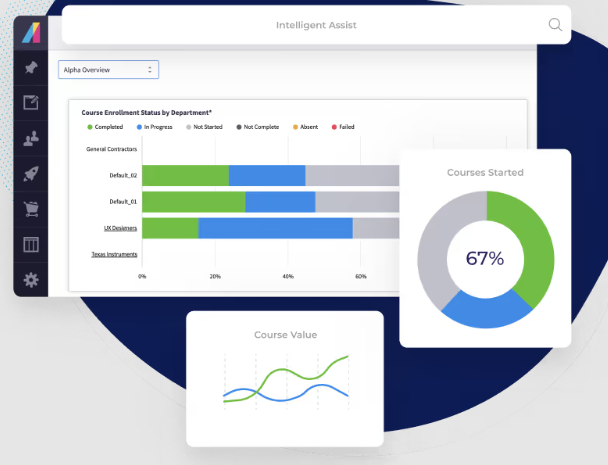
Intelligent Assist surfaces relevant content through AI recommendations. Custom reporting lets admins build compliance and skills dashboards. Absorb Infuse lets you embed learning directly into your existing tools, which is a strong fit for IT teams that live inside internal portals.

‍

Key features

  • Intelligent Assist: Surfaces relevant content with AI-powered recommendations.
  • Custom reporting: Lets admins build compliance and skills dashboards to their specs.
  • Scalable architecture: Handles growing learner populations without performance drops.
  • Absorb Infuse: Embeds learning into your existing apps and internal portals.
  • Integrations: Connects to HRIS, CRM, and collaboration tools out of the box.

‍

Pricing

Custom pricing. Contact sales for a quote.

‍

G2 rating

4.6 out of 5.

‍

‍

9. Degreed

‍

Degreed is a skills intelligence platform with 10 million+ activated users across 160+ countries. The focus is on skills development rather than traditional course delivery.

For large IT organisations, Degreed offers Skill Review assessments, career mobility tools, and an AI agent called Maestro. The platform pulls content from internal and external sources into one experience. You need a rich content ecosystem to get the most out of it.

‍

Key features

  • Skill Review: Assesses and tracks skill levels with structured peer and manager ratings.
  • Maestro AI: Personalises learning paths based on individual goals and skill gaps.
  • Content aggregation: Pulls internal wikis, external courses, and articles into one feed.
  • Career mobility: Maps current skills to internal roles and progression opportunities.
  • Partnerships: Covers 30+ content providers, including Coursera, Udemy, and LinkedIn Learning.

‍

Pricing

Custom pricing. 

‍

G2 rating

4.3 out of 5.

‍

‍

10. Litmos

‍

Litmos is a cloud-based LMS serving 11,000+ organisations across 150 countries. The platform is built for fast deployment, which suits IT companies with global teams that need to get training live quickly.

The platform handles course delivery and compliance tracking well, but it doesn't include AI skills mapping or adaptive learning paths.

‍

Key features

  • Fast deployment: Gets training live across global teams in days, not months.
  • Three-tier structure: Lets you scale feature depth as you grow.
  • Built-in content library: Sits alongside your custom courses for a blended approach.
  • Compliance tracking: Automates assignment, tracking, and reporting.

‍

Pricing

All three tiers are custom-quoted. 

‍

G2 rating

4.3 out of 5.

‍

Why IT companies need a purpose-fit LMS

Technical skills change faster than you can build courses for them. Cloud platforms release updates weekly. Security frameworks evolve with every new threat. A platform that mapped your team's skills six months ago is already out of date if it relies on manual input.

Integrations decide adoption. If the LMS doesn't plug into Slack, Teams, Jira, or your HRIS, nobody will open it. Your engineers spend their day in code editors and project boards. The learning platform needs to meet them there.

Developer onboarding sets the tone. New engineers need to ramp on your tech stack, codebase, and internal processes in weeks, not months. A purpose-fit LMS delivers structured onboarding paths mapped to role-specific skills, so new hires know exactly what to learn and in what order.

‍

Why listen to us

HowNow is an AI-native learning platform built for companies where skills move fast. We work with IT and tech organisations every day, from consultancies to product companies to global enterprises.

‍

Here's what they've achieved with HowNow:

  • Infinity Works, a UK-based IT consultancy, hit 97% learner activation within four months.
  • Trainline cut compliance training time by 50% after switching to HowNow.
  • TomTom reached 90%+ engagement and saw a 7–10% increase in internal mobility.
  • AND Digital achieved 75% daily platform use and 95% workforce engagement with their AI Ignition programme.
  • Hotelplan mapped 300+ job roles in one month and hit 99% activation within three months.

We build for this problem. We also reviewed every platform on this list. When another tool fits your situation better, we'll say so.

‍

‍

What to look for in an LMS for IT companies

Not every LMS is built for technical teams. Here's what to prioritise.

  • Skills tracking: Can it map and track technical skills automatically? Or does it only log course completions? IT companies need a platform that understands cloud certifications, programming languages, and security frameworks at the role level.
  • AI features: Does the platform use AI for personalisation, content recommendations, or skills mapping? Surface-level AI won't cut it. Look for a platform where AI runs through coaching, content creation, and analytics.
  • Integrations: Does it plug into the tools your engineers already use? Slack, Teams, Jira, your HRIS. If people have to leave their workflow to learn, they won't.
  • Compliance automation: Can it automate certification tracking, renewal reminders, and audit evidence? SOC 2, ISO 27001, and GDPR compliance require ongoing proof, not a one-off tick box.
  • Pricing transparency: Can you build a business case without sitting through a sales call first? Check whether skills intelligence, AI features, and content are included or sold as paid add-ons.

‍

How to choose the right LMS for your it company

Start with what you're tracking. If you need to map cloud certifications, programming languages, and security frameworks to each role, you need AI-driven skills mapping. Not every platform here does that.

Think about integrations. Your engineers live in Slack, Teams, and Jira. If the LMS doesn't connect to those tools, adoption will stall from day one.

Factor in your compliance burden. SOC 2, ISO 27001, and GDPR all need ongoing evidence. Pick a platform that automates tracking and reminders rather than relying on spreadsheets.

Consider your team size. A team of 30 has different needs from one of 3,000. TalentLMS fits small IT teams on a budget. Cornerstone and Docebo make more sense at enterprise scale. HowNow covers mid-to-large organisations where skills mapping and AI coaching matter most.

Check what's included in the price. Skills intelligence, AI coaching, and content libraries are often sold as paid add-ons. Those costs add up at renewal, so get the full picture before you sign.

‍

Your IT team deserves a learning platform that keeps pace

Technical skills don't wait. New frameworks ship, security threats evolve, and cloud platforms push updates faster than any course catalogue can track. Your learning platform needs to move at the same speed.

That's why we built HowNow around a Skills Graph that maps skills from real work, not self-assessment forms. Guru coaches your team with answers grounded in your own documentation and cites its sources. 

IT companies like Infinity Works, Trainline, and TomTom already use HowNow to connect learning to the skills their teams need. Infinity Works hit 97% activation in four months. Trainline halved compliance training time. TomTom saw 90%+ engagement and a measurable increase in internal mobility.

If you want to see how the Skills Graph and Guru work with your team's data, book a demo.

‍

‍

FAQs

What's the best lms for IT companies?

HowNow is the strongest option for AI-driven skills mapping tied to job-market data. 360Learning suits teams that want peer-led technical training. Docebo fits large enterprises with broad content needs.

‍

Do IT companies need AI features in an lms?

AI skills mapping and personalised learning paths save significant time when technical skills change fast. Without them, your L&D team manually updates taxonomies. That doesn't scale.

‍

How much does an LMS for IT companies cost?

LMS pricing varies by vendor. HowNow is quoted per organisation, starting from £60/user/year. Self-serve options include TalentLMS ($119/month), 360Learning ($8/user/month), and Skillsoft Percipio ($20/seat/month).

‍

Can an LMS track technical certifications?

Most platforms on this list track certifications and send renewal reminders. HowNow, Cornerstone, and Litmos offer the deepest compliance automation, including audit evidence and automated assignment.

‍

What's the difference between an LMS and an LXP?

An LMS delivers and tracks structured courses. An LXP aggregates content from multiple sources and lets learners explore. HowNow combines both with AI-driven skills intelligence.

We Reviewed the 10 Best Learning Management Systems for IT Companies

Blog
October 7, 2026
.
5 min read
Modern L&D
made simple.
Connect with an expert to explore what's possible with HowNow.
Get a demo